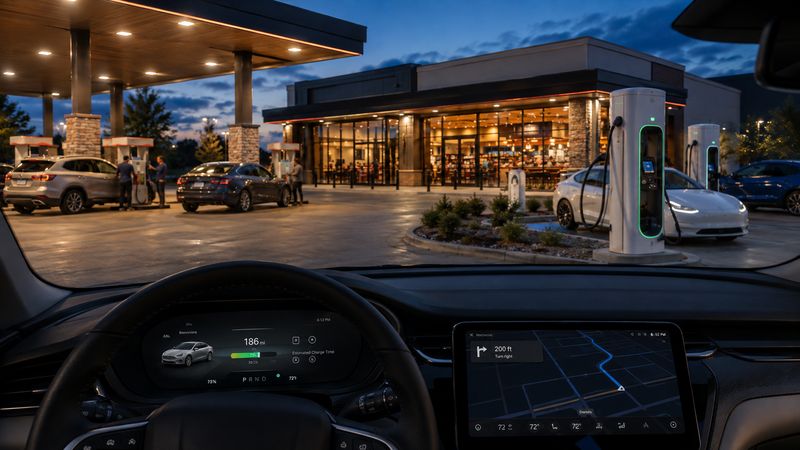
Convenience Store Risk in the Age of Electric Vehicles

Electric vehicle purchases are forecast to grow sharply by 2030, and convenience stores are being asked to decide, right now, whether EV charging is a smart bet or a costly one. Our new white paper, "Convenience Store Risk in the Age of Electric Vehicles," breaks down the charging technology, the real economics, and the business models operators need to understand before committing capital.

New Charging Economics Will Test the C-Store Fuel Business

For generations, fuel sales have been the predictable core of the C-Store business. But as EV adoption grows and federal dollars flow into charging infrastructure, operators face a decision that's no longer hypothetical: invest in charging now, wait and see, or stay out of it entirely — each with real financial consequences.

Fill Out and Download Your White Paper

Thank you! You will receive a download link shortly.
Oops! Something went wrong while submitting the form.
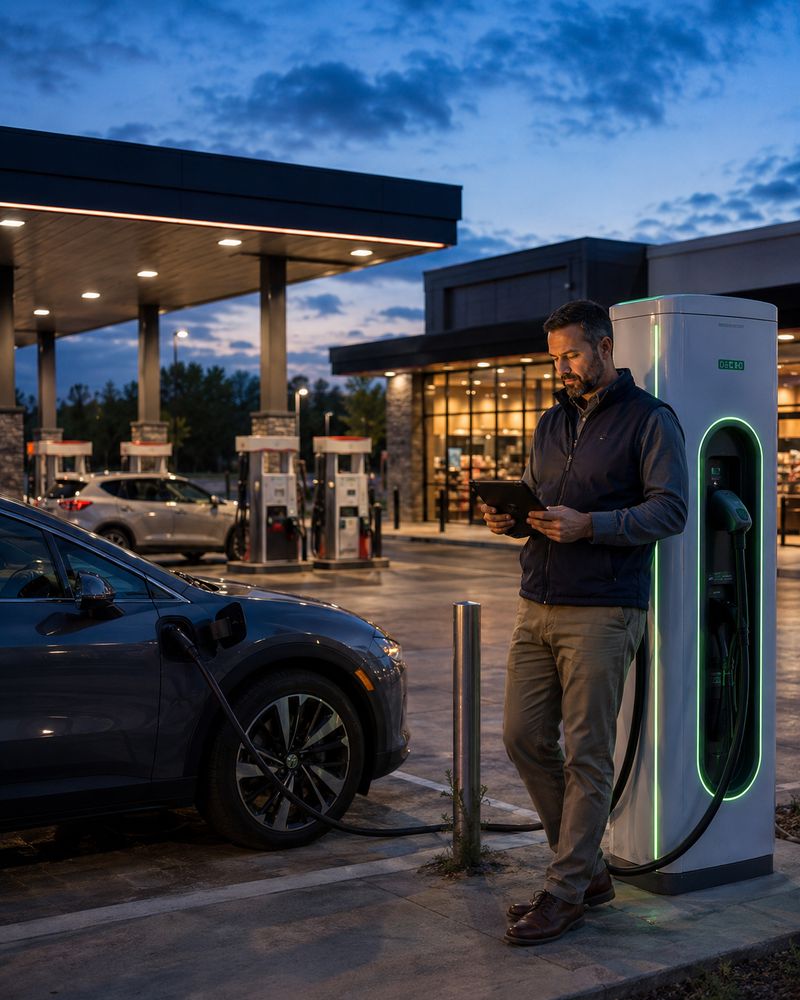
Illuminated convenience store gas station canopy against a starry night sky

What You Will Learn

EV charging isn't like installing a new pump. The technology, the costs, and the customer experience all work differently. Operators who want to make an informed decision need to understand exactly how charging economics, timing, and consumer behavior differ from the fuel business they know today.

Charging Speed Reality

DC fast chargers take 20-40 minutes per vehicle versus a 2-minute gas fill — a dwell-time shift that changes what customers expect from a stop.

Home-First Charging

About 95% of EV charging happens at home today, meaning public stations remain a supplement, not the main event, for now.

Capital Investment

A single charging unit runs $50,000+ to install, plus $2,000-$3,000 a year to maintain — a real barrier for independent operators.

Location Advantage

Stores near major intersections and high-traffic corridors have a shot at capturing charging demand that others can't match.

Revenue Models

Site-owned, cost-recovery, network-owned, and hybrid — four distinct business models let operators match strategy to risk tolerance.

Regulatory Complexity

Federal standards are still catching up and state rules vary widely, so legal review matters before any capital goes in the ground.

Market Uncertainty

Petroleum's continued dominance and shifting policy mean the payoff timeline for charging investment is still very much unwritten.

Customer Experience

Premium charging networks are building out waiting areas and amenities, turning a 20-40 minute wait into a revenue opportunity instead of dead time.

Know Before You Invest.

The EV charging decision for C-Stores has arrived. Understanding the real economics, not just the hype, will determine whether charging investment strengthens your business or drains it.

Close-up of an electric vehicle charging connector plugged into a car

Understand the Real Charging Economics

See exactly what a charging station costs to install and maintain, and how site-owned, cost-recovery, and network-owned models each pencil out.

Customer completing a contactless payment with a mobile card reader at checkout

See Where the Opportunity — and the Risk — Really Sit

From location strategy to regulatory uncertainty, understand what separates C-Stores positioned to benefit from EV growth from those exposed to it.

Convenience store gas station with red fuel pumps and lit canopy at dusk