


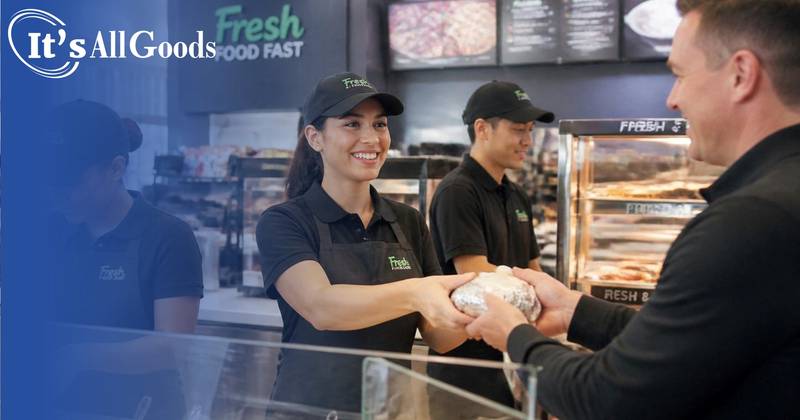
onvenience store foodservice has evolved dramatically over the past two decades. As fresh food, prepared meals, and grab-and-go programs have become primary growth engines, the expectations placed on store employees have changed just as quickly. Today's foodservice associate is no longer simply stocking shelves or operating a cash register—they are preparing food, ensuring food safety, managing quality, serving customers, and protecting the store's reputation with every transaction.
While equipment, menu strategy, and merchandising all contribute to success, none of them can compensate for a poorly supported workforce. Retailers that consistently outperform competitors often have one characteristic in common: they invest as deliberately in their people as they do in their food programs.
Traditional convenience store operations focused largely on fuel, packaged merchandise, and rapid checkout. Foodservice introduces a fundamentally different operating model.
Employees must understand product preparation, portion consistency, sanitation procedures, holding times, inventory rotation, customer interaction, and production timing. The work requires technical skills, judgment, and the ability to perform efficiently under changing demand throughout the day.
As fresh food programs expand, stores increasingly need employees who can think like foodservice professionals rather than traditional retail clerks.
That evolution changes hiring priorities as well. Reliability, adaptability, communication skills, and a service mindset become just as important as previous retail experience.
Many operators struggle to recruit foodservice employees because the position is presented as generic retail work rather than a specialized role.
Candidates are more likely to respond positively when employers clearly communicate expectations, opportunities for advancement, and the importance of foodservice to the business. A well-written job description that emphasizes customer interaction, culinary preparation, teamwork, and skill development attracts a different applicant than one focused solely on stocking and cashier responsibilities.
Retailers such as QuikTrip have built strong operating reputations by investing in structured hiring, competitive compensation, and clear operational standards. While every retailer operates differently, the broader lesson is consistent: successful foodservice programs begin by recruiting employees who understand that they are joining a customer-focused operation rather than simply filling shifts.
Hiring should focus on long-term fit, not merely immediate availability.
“Clients do not come first. Employees come first. If you take care of your employees, they will take care of the clients.”
Richard Branson, Founder, Virgin Group
Foodservice may begin with recipes and procedures, but it succeeds through people who understand and believe in the experience they are delivering.
Hiring the right people is only the first step. Consistent execution depends on consistent training.
Employees should understand not only how to perform each task but why each procedure matters. When team members appreciate how proper food rotation protects quality, how accurate portioning protects margins, or how presentation influences purchasing decisions, they become active participants in operational excellence rather than simply following instructions.
Effective foodservice training typically includes:
Training should not conclude after onboarding. Regular coaching, refreshers, and cross-training strengthen both confidence and operational flexibility.
Employee turnover is expensive, but its cost extends well beyond recruiting expenses.
Every experienced employee who leaves takes operational knowledge with them. New hires require supervision, productivity temporarily declines, and customer experience can become less consistent while replacements gain confidence.
Retailers that achieve lower turnover often emphasize predictable scheduling, recognition, opportunities for advancement, and supportive store leadership. Employees who feel valued are more likely to take ownership of food quality, customer service, and operational standards.
Retention should therefore be viewed as an operational strategy rather than solely a human resources objective.
Stable teams execute more consistently.
Equipment and procedures establish standards, but store leadership determines whether those standards become daily habits.
Managers who routinely coach employees, recognize strong performance, maintain accountability, and model foodservice excellence create environments where expectations remain visible. Conversely, inconsistent leadership often produces inconsistent execution.
Retailers known for strong foodservice operations typically build cultures where preparation standards, cleanliness, customer interaction, and teamwork receive continuous attention rather than periodic correction.
Culture is created through repetition. Every shift reinforces—or weakens—the standards customers ultimately experience.
Foodservice investments are often measured through equipment purchases, menu development, and facility improvements. Investments in people can be harder to quantify, yet they frequently produce the highest long-term return.
Experienced employees prepare food more efficiently, waste less product, solve customer problems more effectively, and contribute to stronger team performance. They also create consistency—one of the defining characteristics of successful convenience foodservice programs.
As labor markets continue to evolve, retailers that treat employee development as a strategic investment rather than an operating expense will be better positioned to sustain growth.
The most successful foodservice programs are ultimately built by people who understand both the technical and human sides of hospitality.
Convenience store foodservice has become too important to rely on transactional hiring and minimal training. As fresh food and prepared meal programs continue to grow, employees become the primary link between operational strategy and customer experience. Retailers that recruit thoughtfully, train consistently, develop leaders, and invest in employee retention create foodservice operations that are more resilient, more consistent, and better equipped to compete in an increasingly demanding marketplace.

Subscribe to receive latest news
12968 Vallejo Circle, Westminster CO. 80234
Phone: (303) 604-1064