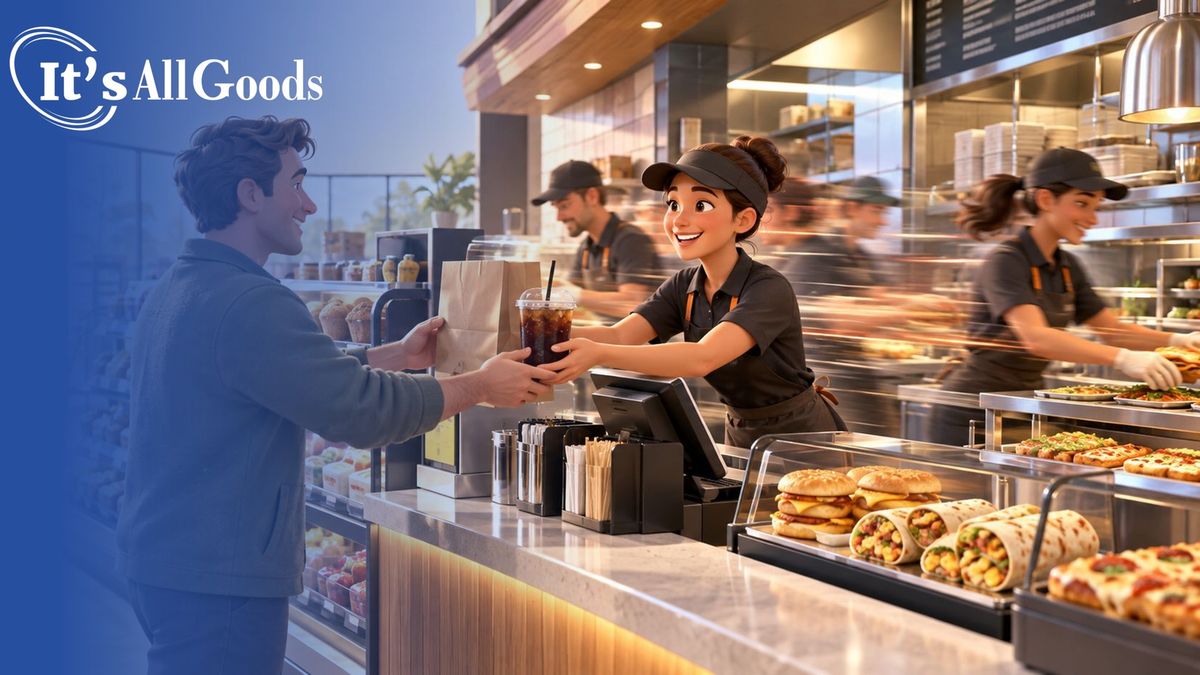


ecruiting talented employees is only the beginning of building a successful foodservice operation. The true differentiator is what happens after hiring. Training transforms individual effort into organizational capability, ensuring that every employee understands not only how to perform a task, but why consistency matters. In convenience retail, where customers expect speed, quality, and reliability on every visit, effective training is one of the most valuable investments an operator can make.
The best foodservice programs are not built around exceptional individuals. They are built around systems that enable ordinary people to deliver exceptional results consistently.
Customers rarely notice a single outstanding interaction, but they immediately recognize inconsistency.
A breakfast sandwich prepared perfectly on Monday but poorly assembled on Wednesday damages confidence in the entire foodservice program. Likewise, inconsistent portion sizes, presentation, or food quality create uncertainty that discourages repeat visits.
Structured training reduces variation by establishing common expectations. Every employee learns the same preparation standards, sanitation procedures, customer service practices, and quality benchmarks. Over time, these shared expectations become habits rather than instructions.
It should be considered an imperative to rely on standardized food preparation procedures across hundreds of locations to ensure customers receive a familiar experience regardless of which store they visit. That consistency strengthens both operational efficiency and brand trust.
Consistency is rarely accidental. It is taught.
As convenience store foodservice expands, operations naturally become more complex. New menu items, additional equipment, seasonal promotions, and evolving food safety requirements all increase the number of decisions employees make during a shift.
Well-designed standard operating procedures simplify those decisions.
Clear procedures should define:
When procedures are documented, demonstrated, and reinforced through coaching, employees spend less time wondering what to do and more time executing confidently.
Good procedures reduce cognitive load while improving operational performance.
“Excellence is the gradual result of always striving to do better.”
Pat Riley, NBA Coach and Executive
Foodservice excellence is not created by occasional exceptional effort. It is built through disciplined repetition of proven practices.
One of the greatest risks in foodservice operations is dependence on a small number of highly experienced employees.
Cross-training helps eliminate that vulnerability by preparing team members to perform multiple responsibilities throughout the store. An associate who understands both food preparation and front-end operations can respond more effectively during peak demand or unexpected staffing shortages.
Smart retailers have long emphasized operational flexibility through structured employee development. While responsibilities vary by position, the ability to move confidently between tasks contributes to the fast-paced execution for which the company is well known.
Cross-training also creates career development opportunities, increasing employee engagement while strengthening operational resilience.
Many organizations unintentionally limit training to onboarding. Once initial instruction ends, employees receive feedback primarily when something goes wrong.
The strongest operators take a different approach. Coaching becomes part of everyday leadership.
Managers regularly observe food preparation techniques, recognize strong performance, answer questions, and reinforce best practices before problems develop. These small coaching moments build confidence while maintaining standards.
Employees who receive continuous coaching typically improve more quickly than those who learn primarily through correction after mistakes occur.
Learning should be continuous, not event-based.
Training should be evaluated the same way other business investments are measured.
Useful indicators include:
If performance does not improve after training, the issue may not be employee capability but training design itself.
Leading retailers continually refine their training systems based on operational results rather than assuming completion equals competence.
Measurement transforms training from an activity into a management system.
Training should not be viewed as a single program but as part of organizational culture.
Retailers that encourage curiosity, reward improvement, and celebrate operational excellence create environments where employees continue developing long after orientation ends. Team members become more willing to share ideas, solve problems collaboratively, and take ownership of foodservice quality.
That culture benefits both employees and customers. Experienced associates become mentors. New hires gain confidence more quickly. Managers spend less time reacting to preventable problems and more time improving performance.
Over time, learning itself becomes a competitive advantage.
Exceptional foodservice depends on exceptional execution, and exceptional execution begins with effective training. Standardized procedures, continuous coaching, cross-training, and measurable performance systems enable convenience retailers to deliver consistent customer experiences regardless of location or shift. As foodservice continues to grow in strategic importance, retailers that invest in developing knowledgeable, confident employees will build stronger operations, stronger customer loyalty, and a workforce prepared to support long-term growth.
Subscribe to receive latest news
12968 Vallejo Circle, Westminster CO. 80234
Phone: (303) 604-1064