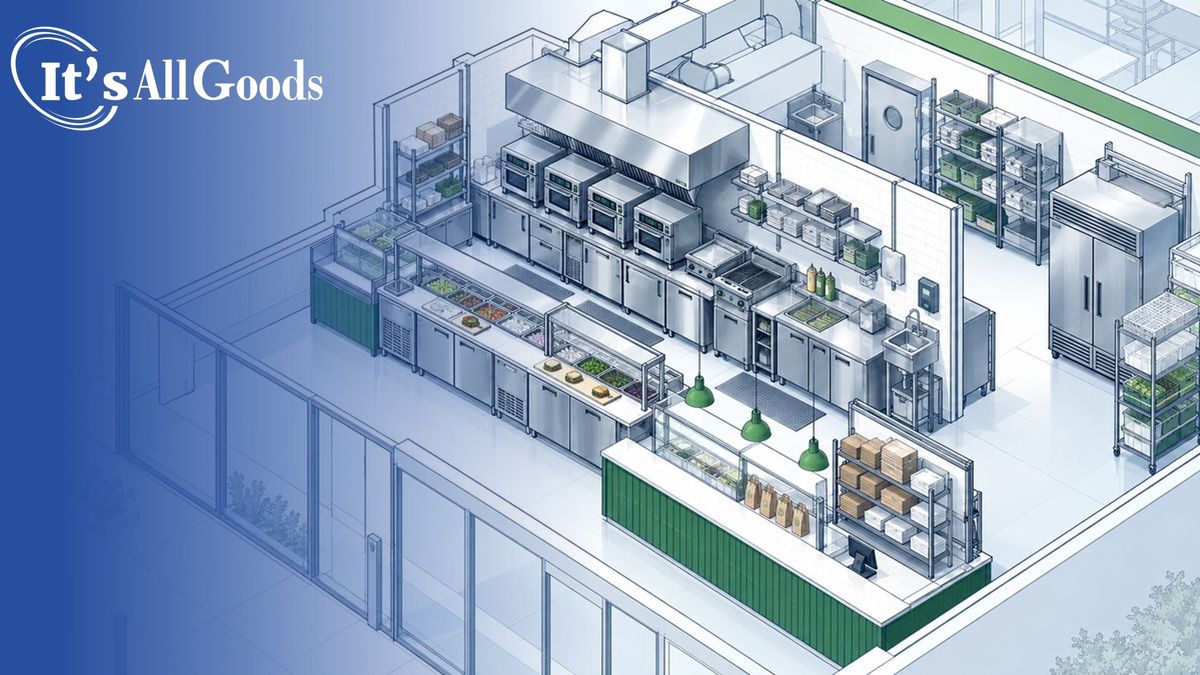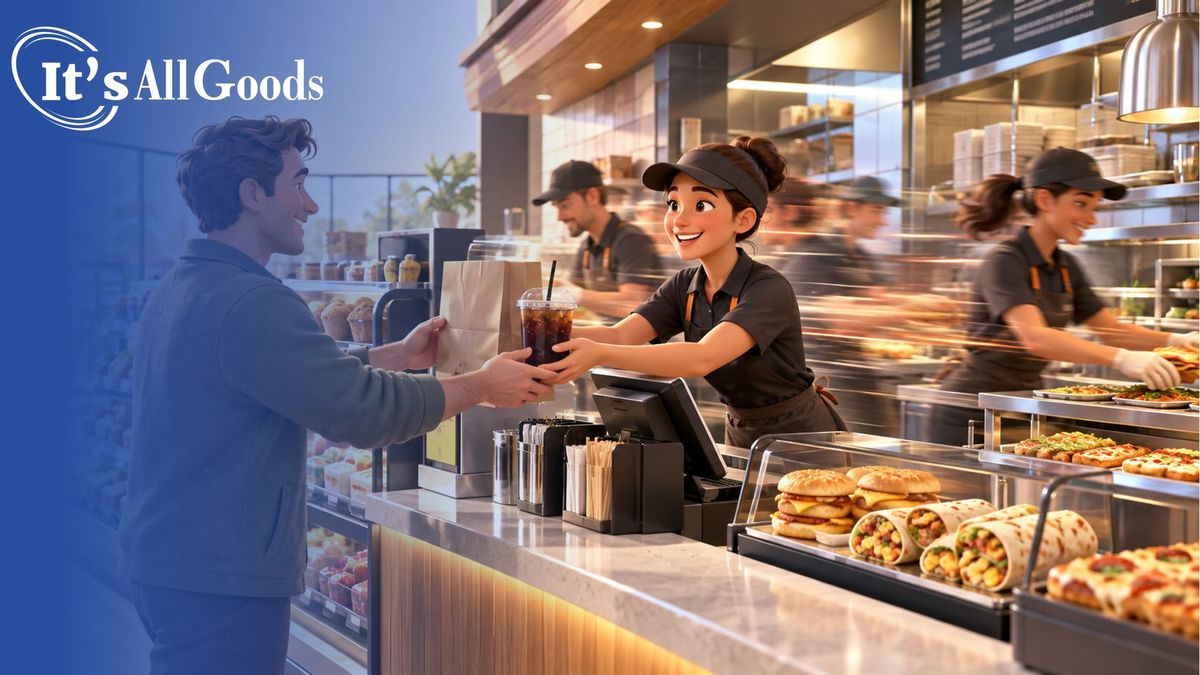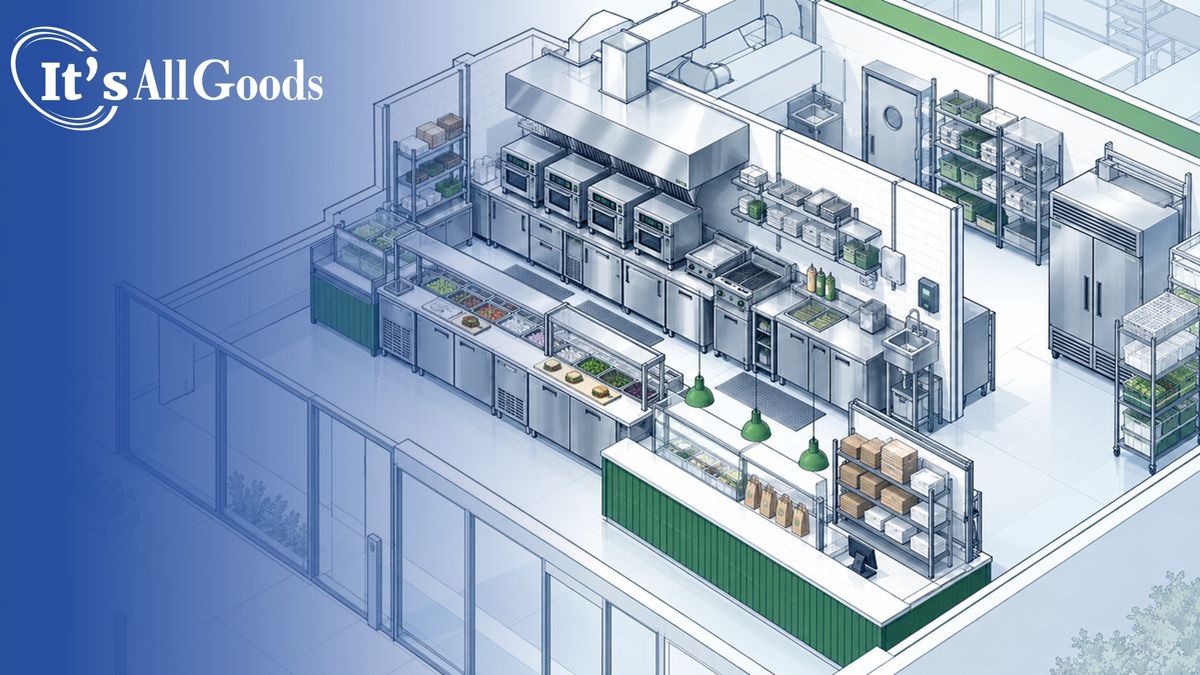


uture-ready convenience-store kitchens are not defined by one revolutionary appliance or a fully automated production line. They are built through a series of practical decisions that allow stores to respond to changing menus, labor conditions, ordering channels, customer expectations, and technology. The objective is not to predict every development that may affect foodservice. It is to create an operating platform that can absorb change without requiring the retailer to rebuild the kitchen each time the business evolves.
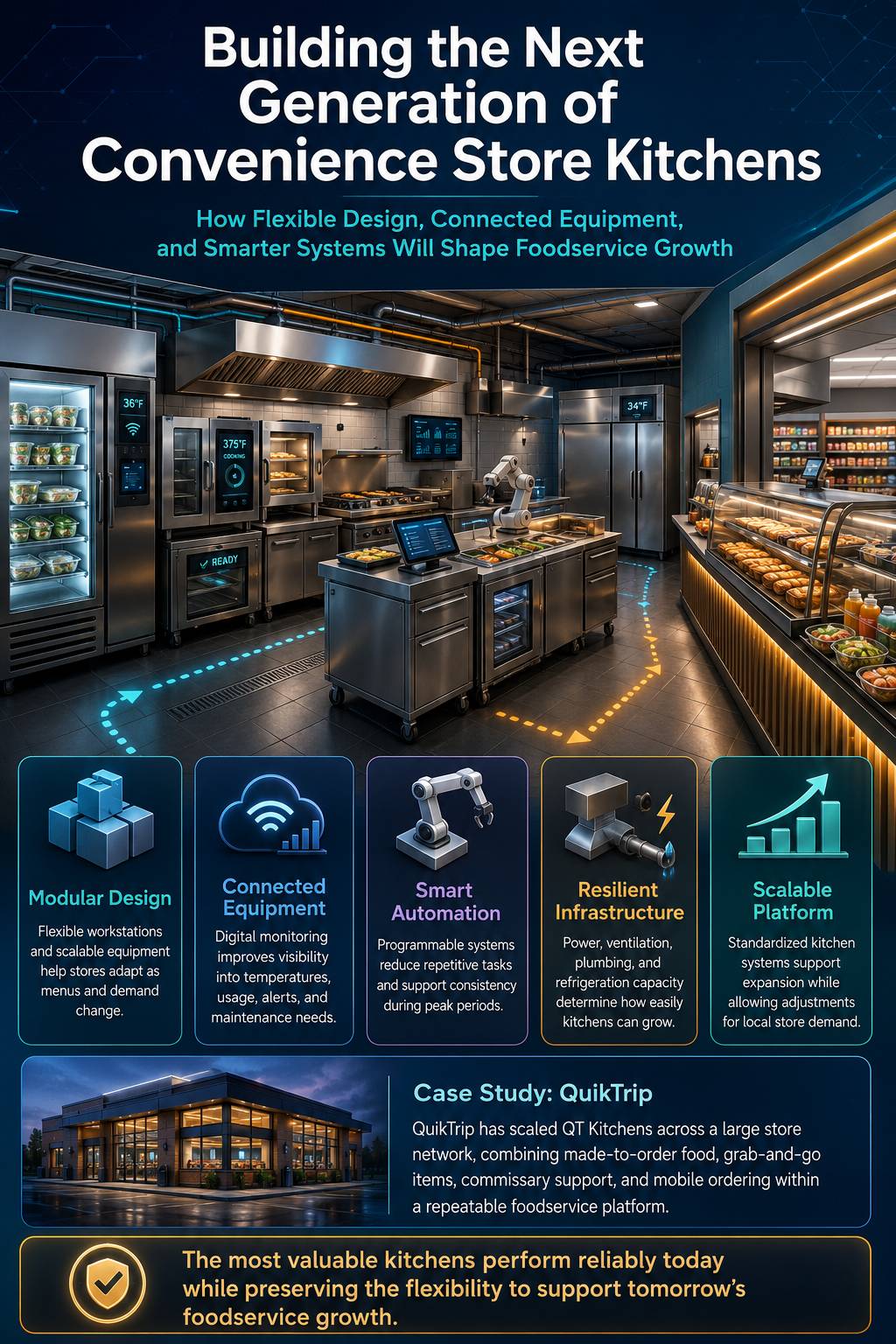
Convenience-store foodservice has changed considerably as retailers have added made-to-order meals, expanded grab-and-go programs, introduced specialty beverages, and served more dayparts. That evolution is unlikely to stop. Kitchens designed too narrowly around one menu or operating model can become expensive obstacles when the retailer needs to change direction.
Adaptability begins with the physical layout. Modular counters, movable workstations, adjustable shelving, and replaceable equipment sections can make it easier to introduce new products or reorganize production. Utility connections should be positioned so equipment can be exchanged without extensive reconstruction. Adequate electrical capacity, ventilation, drainage, water service, refrigeration, and data infrastructure can preserve options that the retailer may not need immediately but could require later.
This does not mean creating a generic room without operational logic. Workflow remains essential. Receiving, storage, preparation, cooking, holding, service, and cleanup still need a clear sequence. The difference is that a future-ready layout supports that sequence without permanently locking the store into one exact configuration.
The broader objective is disciplined flexibility: enough structure to support efficient execution today and enough adaptability to accommodate tomorrow’s menu.
Connected equipment can give operators greater visibility into how kitchens perform across stores and shifts. Depending on the platform, equipment may record temperatures, cooking cycles, operating status, energy consumption, cleaning activity, fault codes, or other performance information.
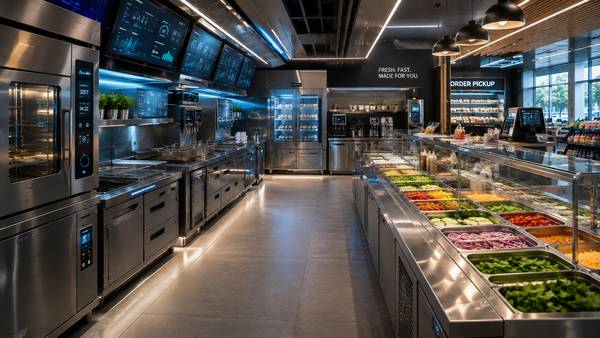
The value does not come from collecting data for its own sake. It comes from using relevant information to identify patterns and support better decisions.
A retailer may be able to compare equipment utilization among locations, determine whether programmed cooking cycles are being used consistently, identify recurring service issues, or review whether a unit is operating outside expected parameters. Centralized information can help operations and maintenance teams prioritize attention rather than relying entirely on store-level reporting after a problem has already interrupted service.
Connected systems must still be practical. Operators should evaluate data security, software support, subscription costs, system compatibility, connectivity requirements, and whether information can be accessed in a useful format. A sophisticated dashboard provides little value when store teams and field managers cannot translate its information into action.
Technology is most useful when it reduces uncertainty. It should help retailers understand what is happening in the kitchen, where intervention is required, and which improvements can be applied across the organization.
Automation can support foodservice by reducing repetitive work, simplifying production, and making consistent execution easier. Programmable ovens, automated beverage platforms, portioning systems, self-cleaning functions, temperature controls, and digital production guidance can all reduce the number of manual decisions required during a busy shift.
The strongest applications generally address a clearly defined operational problem. A programmable cooking platform may reduce variation between employees. An automated drink system may increase throughput during peak periods. Digital preparation prompts may make it easier to train employees or transition between dayparts.
Automation becomes less helpful when it introduces more complexity than it removes. Employees should not have to navigate unnecessary screens, manage overlapping software platforms, or repeatedly override automated processes that do not match actual store conditions.
Retailers should also consider what happens when an automated system fails. Employees need an understandable backup procedure, and the store should know which parts of the menu can continue operating. An automation strategy that creates total dependence on one device or software platform may improve efficiency when everything works while increasing vulnerability when it does not.
The correct test is operational: does the technology make the work safer, faster, more consistent, or easier to manage? When the answer is unclear, the investment may be solving the wrong problem.
“Our industry does not respect tradition—it only respects innovation.”
Satya Nadella, CEO, Microsoft
The visible equipment receives most of the attention in a kitchen, but infrastructure often determines what the store can realistically support.
Electrical service must accommodate current loads and reasonable future demand. Ventilation must support the cooking methods used in the space. Refrigeration capacity must align with the volume and variety of ingredients. Drainage, grease management, hot water, handwashing, fire suppression, connectivity, and equipment clearances all influence the kitchen’s long-term usefulness.
Infrastructure also affects maintenance. Equipment should be accessible for inspection, cleaning, and repair. A unit that fits perfectly into a narrow opening may become difficult to service. Utility shutoffs should be reachable. Filters and components requiring routine attention should not be blocked by permanent cabinetry or neighboring equipment.
Resilience deserves equal consideration. A kitchen may benefit from multiple cooking methods, reasonable backup capacity, or menu procedures that allow the store to continue serving a limited selection when a primary unit is unavailable. The goal is not to duplicate every system, but to prevent one failure from eliminating the entire foodservice offer.
Future-ready kitchens are therefore designed beneath the surface as carefully as they are designed above it.
Standardization can improve training, purchasing, maintenance, food safety, and product consistency across multiple stores. Common equipment platforms and repeatable layouts allow employees to move between locations with less retraining and help field teams support operations more efficiently.
However, complete uniformity may not serve every market.
Customer preferences, store volume, traffic patterns, available labor, building size, and competitive conditions can vary considerably. A travel center may need greater production and holding capacity than a neighborhood store. A location with heavy breakfast traffic may require a different equipment balance from one dominated by late-night demand. Regional menu preferences may justify different preparation capabilities.
A practical kitchen platform establishes a common operating foundation while allowing selected components to change. Retailers may standardize core equipment, utilities, food-safety procedures, and workflow while offering modular stations or capacity levels suited to individual locations.
This approach protects the benefits of scale without assuming that every store should operate identically. Standardization should make local adaptation manageable—not prevent it.
QuikTrip provides a useful example of how a retailer can combine a standardized foodservice platform with multiple formats and markets.
When the company opened its 1,000th store in Converse, Texas, in April 2023, the location included a QT Kitchens operation offering made-to-order food, specialty beverages, frozen treats, pizza, breakfast products, roller-grill items, salads, wraps, baked goods, and other grab-and-go selections. QuikTrip’s official announcement for the 1,000th store also noted that fresh food is supplied daily through its bakeries and commissaries.
The company continues to support food production through distribution centers and bakery operations in several metropolitan markets. QuikTrip states that its bakery teams prepare fresh food for daily delivery to stores, while distribution operations move a substantial share of store merchandise.
The importance of this model is not any single menu item or appliance. QuikTrip has built an interconnected platform involving store kitchens, made-to-order production, grab-and-go merchandising, centralized food preparation, distribution, mobile ordering, and repeatable operating practices.
For other retailers, the lesson is not to reproduce QuikTrip’s scale. It is to recognize that future-ready foodservice depends on coordination. Store design, equipment, supply, production, ordering, and employee execution must function as parts of the same system.
A next-generation kitchen should not be treated as a finished design that remains unchanged for a decade. It should support continuous improvement.
Retailers can learn from production times, equipment utilization, waste, customer demand, maintenance history, employee feedback, and menu performance. Those findings can then inform equipment programming, workstation placement, staffing, training, and future store design.
Pilot testing remains important. New equipment and processes should be evaluated in realistic conditions before broad rollout whenever possible. A solution that performs well during a demonstration may behave differently during a breakfast rush, with limited staffing, or after months of repeated cleaning and use.
Feedback from store employees is especially valuable because they encounter the kitchen’s friction points every day. Their observations can reveal unnecessary movement, confusing controls, inaccessible storage, difficult cleaning procedures, and bottlenecks that are not obvious from architectural drawings or performance reports.
Continuous improvement turns the kitchen from a fixed facility into a managed operating platform. That distinction will become increasingly important as foodservice grows more complex.
The next generation of convenience-store kitchens will be shaped by adaptability, operational visibility, practical automation, resilient infrastructure, and thoughtful standardization. None of those elements succeeds independently. Technology must support employees, equipment must support the menu, and the physical kitchen must support both current execution and future change. Retailers that treat the kitchen as an evolving platform rather than a permanent collection of appliances will be better prepared to expand menus, adopt useful technologies, manage labor, and respond to customer demand without repeatedly rebuilding the operation.

Subscribe to receive latest news
12968 Vallejo Circle, Westminster CO. 80234
Phone: (303) 604-1064
Contact Us