

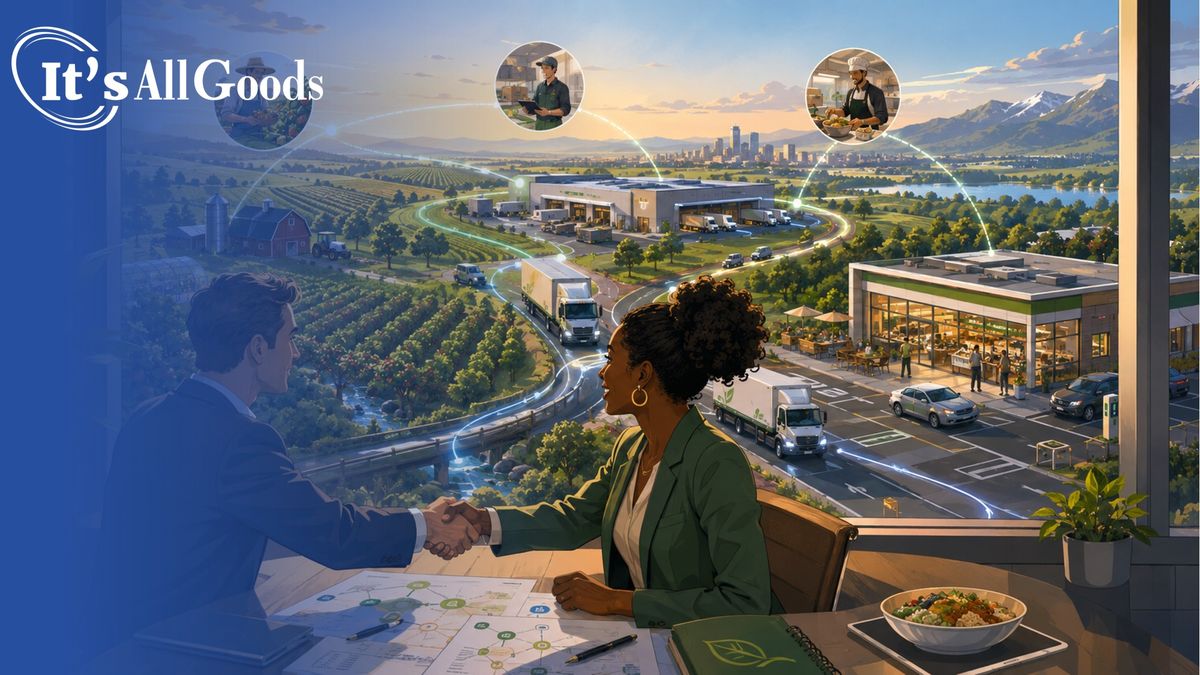
he next generation of convenience-store foodservice sourcing will be shaped less by the search for a single ideal supplier model and more by the ability to adapt. Retailers are expanding fresh-food programs, moving into new markets, facing greater customer expectations, and managing supply networks in an environment where cost, labor, transportation, availability, technology, regulation, and consumer preferences can all change quickly.
That makes resilience a strategic capability. Future sourcing systems will need to provide consistency without becoming rigid, efficiency without creating dangerous dependencies, and enough flexibility to respond when products, demand, or operating conditions change. Supplier strategy will increasingly become an interconnected system of relationships, information, technology, and contingency planning.
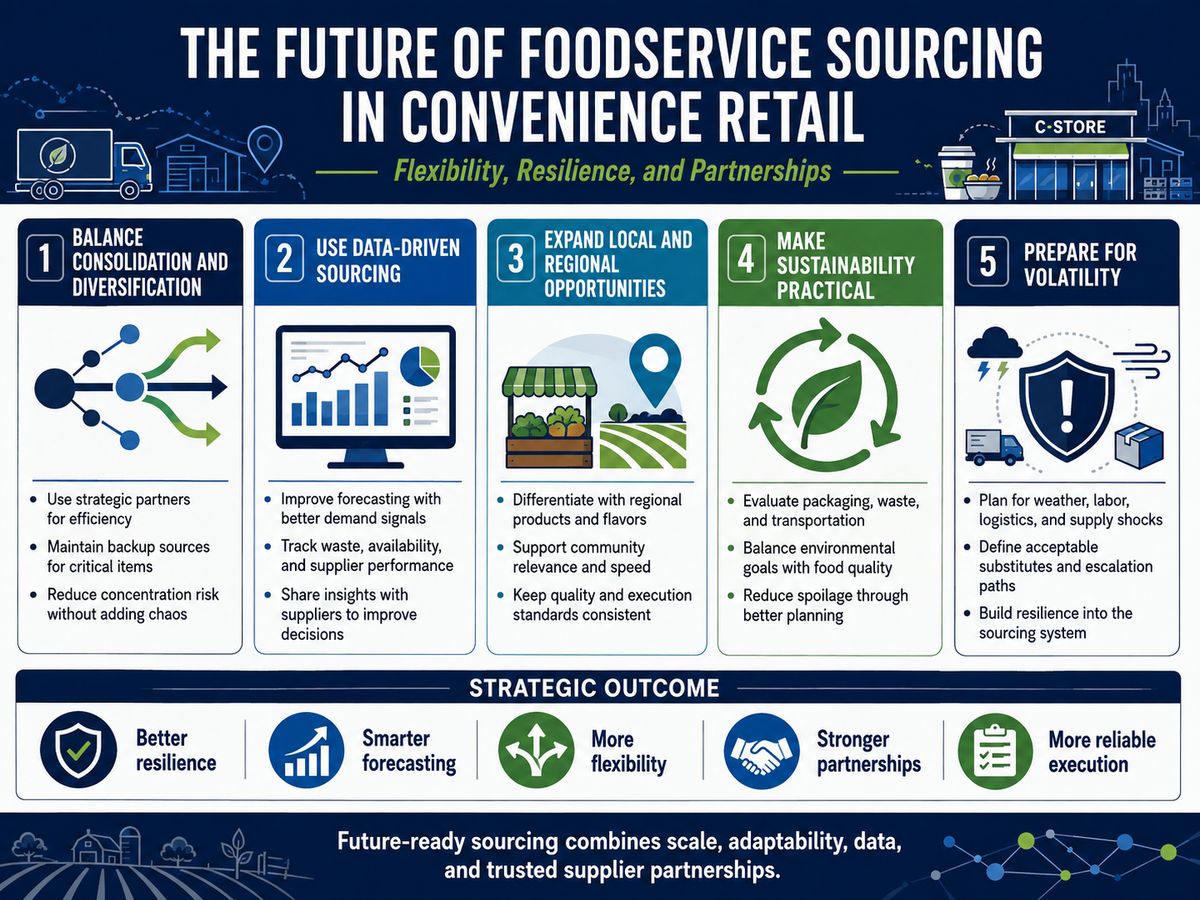
For years, sourcing strategy has often been framed as a choice between consolidation and diversification. Consolidation can provide purchasing leverage, simpler administration, stronger accountability, and more consistent specifications. Diversification can provide alternatives when one supplier, plant, transportation lane, or region experiences disruption.
The future is likely to require a more deliberate combination of both.
Retailers may consolidate distribution or high-volume purchasing with strategic partners while maintaining alternate manufacturers, regional producers, or secondary sources for products where interruption would be especially damaging. The objective is not to maximize the number of suppliers. It is to understand where concentration creates efficiency and where it creates unacceptable risk.
Circle K offers a current example of consolidation being used strategically. In 2025, the retailer announced a third-party logistics partnership under which McLane would operate three dedicated Midwest distribution centers serving approximately 1,600 Circle K and Holiday stores in 14 states. The arrangement was designed to improve inventory management, delivery performance, network agility, and overall supply-chain efficiency. Circle K and McLane Announce Third-Party Logistics Partnership.
That does not mean every category should move toward a single source. Retailers still need to identify which ingredients and packaging components are difficult to replace, which are geographically vulnerable, and where alternate production or distribution capacity should be established before it is needed.
Understanding the distinct functions performed by manufacturers, distributors, and brokers will remain important as retailers design those networks. It’s All Goods provides additional context in What Is the Difference Between a Food Broker and a Food Distributor?.
Sourcing decisions will also become increasingly dependent on better information.
Historically, procurement teams could rely heavily on historical orders, periodic forecasts, supplier conversations, and purchasing experience. Those tools remain useful, but modern foodservice generates much more operating data: store-level sales, waste, promotions, weather effects, daypart demand, inventory movement, product availability, delivery performance, and shelf life.
The opportunity is to connect those signals earlier in the sourcing process.
A retailer that can identify demand changes quickly can give suppliers more useful production forecasts. A retailer that understands waste by product and location can modify order quantities, case packs, or replenishment frequency. Supplier scorecards can reveal patterns that are difficult to see in individual store complaints.
Artificial intelligence and predictive analytics are accelerating that development. NACS reported in 2026 that AI is increasingly being used for inventory optimization and demand forecasting in food retail and foodservice. The same article cited ReFED data estimating that about 60 million tons of U.S. food went uneaten or unsold in 2024, demonstrating the scale of the opportunity for better purchasing, preparation, and inventory decisions. How AI Helps Cut Food Waste
The strategic advantage will not come simply from owning more data. It will come from using data jointly with suppliers to make better decisions.
Large-scale sourcing does not eliminate the value of local and regional suppliers.
As convenience retailers compete more directly on food, regional products can provide differentiation that a completely standardized national assortment cannot. Local bakery items, regional flavors, produce, sauces, proteins, or specialty products can help a retailer connect a food program to the communities it serves.
7-Eleven illustrates how national scale and regional sourcing can coexist. The retailer uses a network of commissaries and bakeries to support national foodservice staples while also developing products that reflect regional tastes. Examples have included Nashville hot chicken, Cuban sandwiches, Asian-inspired items, and other products selected for particular markets. How 7-Eleven Takes a Local Approach to Global Foodservice
“Catering to local tastes is key to delivering a great customer experience.” — Brandon Brown, Senior Vice President, Fresh Foods, 7-Eleven Inc.
Regional sourcing can also shorten some supply routes and give retailers access to suppliers capable of reacting quickly to local demand. But local does not automatically mean simpler. Smaller suppliers may have less production capacity, narrower delivery coverage, different technology capabilities, or limited redundancy.
The opportunity is therefore selective localization: use regional sourcing when it creates meaningful customer or operational value, while maintaining the standards and supply controls required for consistent execution.
Sustainability will increasingly become part of supplier evaluation rather than a separate corporate initiative.
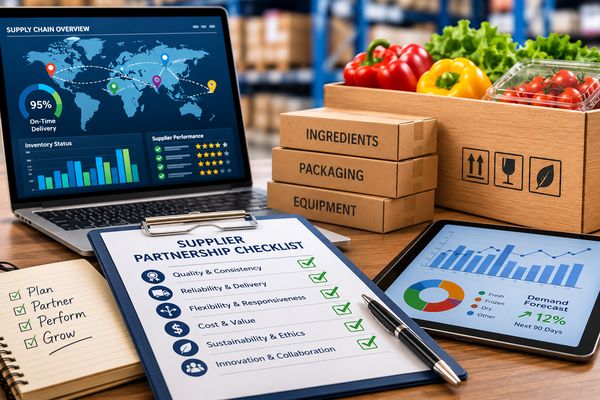
Food waste, packaging materials, transportation efficiency, sourcing practices, energy use, traceability, and the environmental impact of ingredients can all influence supplier decisions. Customers, regulators, investors, and corporate leadership may ask retailers for more visibility into where products come from and how they move through the system.
For convenience-store foodservice, sustainability must still work operationally.
A package with a lower environmental impact is not an improvement if it fails to protect food quality or creates additional waste. A locally sourced ingredient does not automatically improve performance if inconsistent availability forces frequent substitutions. A reduced case pack may decrease waste but increase delivery frequency and freight.
The strongest future strategies will evaluate sustainability alongside food safety, availability, cost, shelf life, labor, and execution rather than treating any one measure in isolation.
Better forecasting may become particularly important because waste sits at the intersection of sustainability and profitability. Reducing unnecessary inventory can lower disposal, freight, purchasing, and environmental costs at the same time. That makes waste prevention one of the clearest examples of an operational goal and a sustainability goal reinforcing each other.
Volatility is unlikely to disappear from food sourcing.
Weather events can affect crops. Disease can affect proteins. Transportation interruptions can delay deliveries. Labor shortages can constrain manufacturing or distribution. Commodity prices can change quickly. Regulations can create new documentation requirements. Consumer trends can unexpectedly increase demand for ingredients that previously represented small categories.
Retailers cannot predict every disruption, but they can design systems that absorb change more effectively.
That means identifying critical products and dependencies, maintaining usable specifications, knowing which substitutes are acceptable, understanding supplier capacity, and defining escalation procedures before an interruption occurs. Contracts and supplier relationships should also provide enough flexibility to respond when assumptions change.
Visibility will become increasingly important as fresh-food programs grow. Recent convenience-retail initiatives around digital receiving, labeling, expiration tracking, and traceability demonstrate how the flow of information from supplier to store is becoming more closely connected to the physical movement of food. NACS has highlighted these technologies as retailers seek to scale fresh food while reducing inventory discrepancies and improving control.
Resilience should therefore be measured not by whether disruptions occur, but by how quickly the system can recognize them, respond, and return stores to normal execution.
The future of foodservice sourcing will not be defined by one universal model.
Some categories will benefit from consolidation. Others will require multiple approved sources. Data will improve forecasting and supplier evaluation, but judgment and relationships will remain important. Regional suppliers will create opportunities for differentiation, but only where they can meet operating requirements. Sustainability will influence sourcing decisions, but those decisions still have to protect quality and execution.
The common thread is flexibility with discipline.
Retailers should build supplier networks that can change without becoming chaotic. That means clear standards, shared information, strong partnerships, contingency planning, and an understanding of which elements of the food program must remain consistent even when the supply environment changes.
As convenience-store foodservice becomes a larger and more sophisticated business, sourcing will become more strategic along with it. Suppliers will increasingly be evaluated not only on what they sell and what they charge, but on how effectively they help retailers manage information, risk, innovation, growth, and change.
The strongest future sourcing systems will combine scale with alternatives, technology with relationships, and efficiency with resilience. Their purpose will remain straightforward: make it easier for stores to deliver dependable foodservice even when the environment behind the menu is anything but predictable.

Subscribe to receive latest news
12968 Vallejo Circle, Westminster CO. 80234
Phone: (303) 604-1064