


ellness in convenience foodservice has moved quickly from a niche request to a mainstream expectation. Shoppers now look for protein, recognizable ingredients, and fresher options, and a growing number are reshaping their eating habits around new medications, dietary preferences, and functional goals. The next question for retailers is not whether wellness matters, but how its meaning will continue to change.
Several forces are likely to shape that next stage: the spread of functional benefits from beverages into food, rising expectations for ingredient transparency, more individual eating patterns, and continued pressure on price. None of these trends requires a convenience store to become a health-food store. Each, however, will influence what customers consider a credible choice, and retailers that understand the direction early can adapt without overextending their operations.
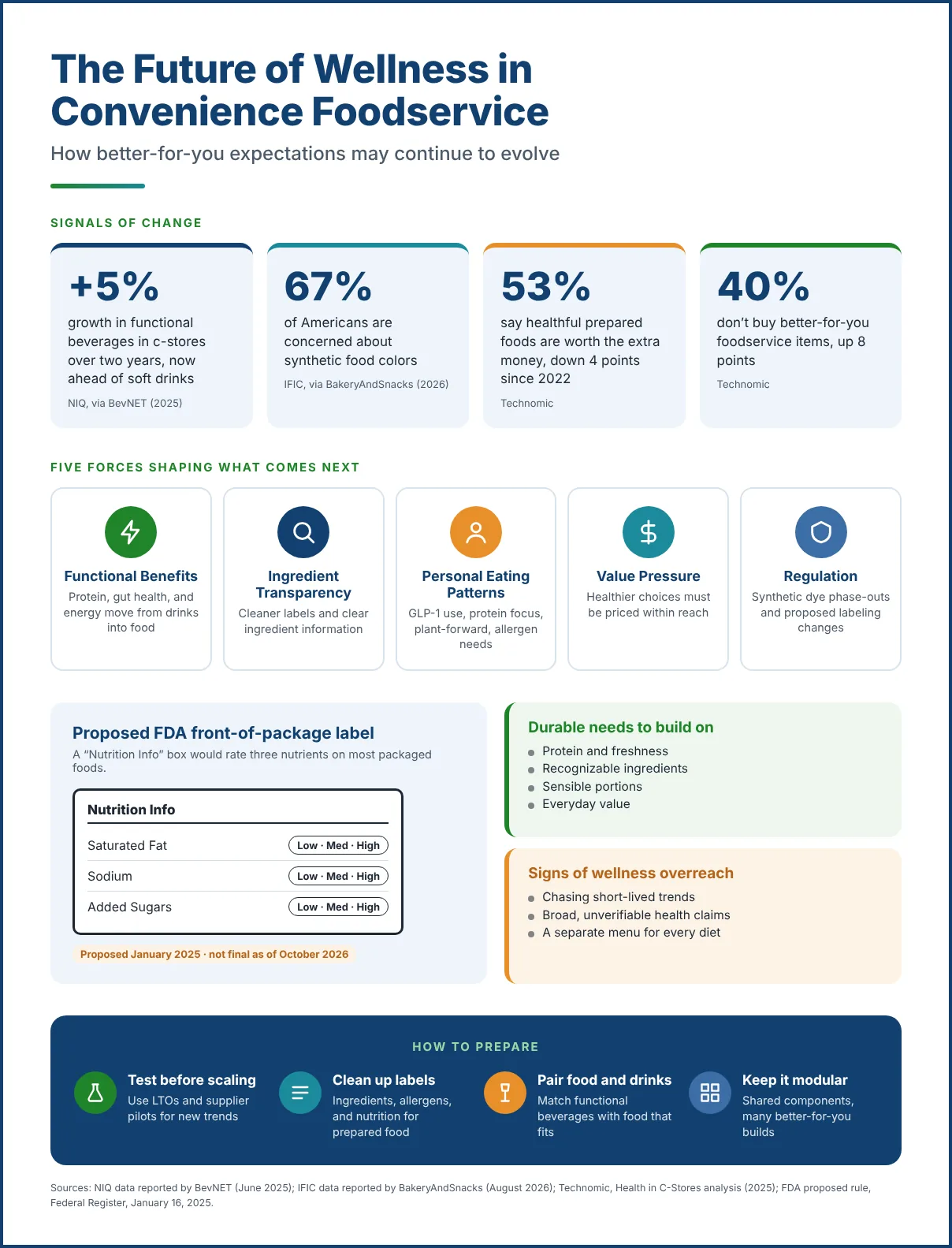
The beverage cooler is already showing where wellness is heading. According to NIQ data reported by BevNET, functional beverages, including energy drinks, have surpassed soft drinks in convenience stores, growing 5% over two years. Protein shakes, electrolyte drinks, prebiotic sodas, and energy beverages with added vitamins have trained customers to expect a drink to do something beyond quench thirst.
That expectation is likely to migrate to food. Customers who choose a drink for protein, hydration, or gut health will increasingly ask the same of a breakfast sandwich, a snack box, or a grab-and-go bowl. Protein has already led the way. Fiber, gut-friendly ingredients, and energy-supporting foods may follow, particularly as manufacturers bring more functional ingredients into formats that work for convenience retail.
For operators, the opportunity is to pair functional food and beverages rather than treat them as separate categories. A high-protein breakfast item placed beside a protein coffee or electrolyte drink tells a clearer story than either product alone, and it fits the way customers already shop the store.
The second major shift is happening on the label. Federal regulators have pushed food companies to remove petroleum-based synthetic dyes, and state laws restricting those ingredients continue to spread. As BakeryAndSnacks reported in August 2026, the FDA is tracking manufacturer pledges to remove the dyes, and companies including Nestlé USA, Campbell’s, and WK Kellogg Co. have already completed or accelerated their transitions. The same report cited IFIC research finding that 67% of Americans are concerned about synthetic food colors.
“Parents and doctors have concerns about petroleum-based food dyes, which have no nutritional benefit.”
— Marty Makary, Former FDA Commissioner
Labels may change in another way as well. The FDA has proposed a front-of-package “Nutrition Info” box that would rate saturated fat, sodium, and added sugars as low, medium, or high. As of October 2026, the rule had still not been finalized, and any final version would include a multi-year compliance period. Still, the direction is clear: customers will increasingly see simple, standardized nutrition signals on the packages around a store’s foodservice program.
That raises the bar for prepared food. When packaged snacks and beverages carry clean-label claims and easy-to-read nutrition information, a foodservice item with no ingredient details can look less trustworthy by comparison. Retailers should expect to provide clearer ingredient lists, allergen information, and nutrition data for their own prepared foods and private label items, and to work with suppliers on cleaner formulations before customers or regulators demand them.
Eating patterns are becoming more individual. GLP-1 medications are already changing portion expectations for millions of Americans, and the arrival of oral versions such as Novo Nordisk’s Wegovy pill could broaden their use further. At the same time, more customers follow high-protein, plant-forward, dairy-free, lower-sugar, or allergen-conscious diets.
Loyalty programs and digital ordering will make it easier to recognize those preferences and respond with relevant offers, such as a protein-forward breakfast promotion for a frequent morning customer or a smaller-portion bundle for someone who rarely buys full meals. Technology may personalize the offer long before it personalizes the product.
The operational limit remains the same, however. A convenience store cannot build a separate menu for every diet. The more practical future is modular: a small set of core components that can be combined into several better-for-you options, clearly labeled so customers can identify what fits their needs. Personalization will succeed when it works through simplicity rather than against it.

Price may be the most important constraint on wellness growth. Technomic research found that 53% of consumers say healthful prepared foods and beverages are worth the extra money, down four points from 2022, while the share who do not buy better-for-you foodservice items rose eight points to 40%. Interest in healthier eating is strong, but willingness to pay a premium is not unlimited.
That suggests the future of wellness in convenience retail will depend on accessible pricing. Smaller portions, ingredient swaps that do not raise costs, and better-for-you versions of everyday items are likely to grow faster than premium specialty products. Retailers that position healthier choices as everyday value, rather than as an upgrade for a narrow audience, will reach more customers.
With so many trends competing for attention, the greatest risk may be doing too much. Every new functional ingredient, diet label, or wellness claim can add complexity, raise costs, and create compliance exposure. Products launched around a short-lived trend can also leave a store with slow-moving inventory and a confusing assortment.
A disciplined approach starts with durable needs that customers consistently express: protein, freshness, recognizable ingredients, sensible portions, and value. New trends can be tested through limited-time offers or supplier partnerships, then expanded only when sales and repeat purchases justify them. Claims should stay specific and verifiable. A protein count or an ingredient list builds more trust than a broad promise of health.
Alltown Fresh, the fresh-focused convenience format operated by Global Partners, offers a view of where better-for-you convenience can go when wellness is built into the format from the start. Each store centers on a made-to-order kitchen with chef-prepared food, serving breakfast all day alongside salads, grain bowls, smoothies, and better-for-you options, plus grab-and-go meals made fresh daily. The stores also feature a marketplace of local and curated products and a beverage program that includes bean-to-cup coffee, teas, and fruit juices.
The format has continued to expand. In its September 2026 announcement of a new store in New Milford, Connecticut, Global Partners described the location as the 18th Alltown Fresh, while still pairing the food program with traditional convenience features such as fueling, curbside pickup, and 24/7 hours. Not every operator needs a made-to-order kitchen, but the concept shows that fresh, better-for-you food can anchor a convenience format rather than sit at its edges.
The future of wellness in convenience foodservice will likely be defined less by any single trend than by steadily rising expectations. Customers will expect food to deliver functional benefits, labels to explain what is inside, offers to reflect their individual needs, and healthier choices to be priced within reach. Regulation and manufacturer reformulation will continue to push in the same direction.
Retailers do not need to chase every development to keep pace. Those that build around durable needs, test new ideas carefully, communicate clearly, and keep execution simple will be well positioned to make wellness a lasting part of their foodservice programs rather than a passing promotion. As explored in It’s All Goods’ Why Health and Wellness Matter in Convenience Store Foodservice, credibility is built through consistency, and the same will hold true as expectations evolve.
Functional benefits such as protein, gut health, and energy; greater ingredient transparency; more individual eating patterns, including GLP-1 use; and continued pressure on price are likely to have the greatest influence.
Many manufacturers are already reformulating. Retailers should expect cleaner labels across packaged products and should review their own private label and prepared food ingredients so foodservice items keep pace with customer expectations.
The proposal would add a box rating saturated fat, sodium, and added sugars as low, medium, or high. As of October 2026 it had not been finalized, and any final rule would include a multi-year compliance period.
Not necessarily. Consumer willingness to pay extra for healthful items has softened, so smaller portions, cost-neutral ingredient swaps, and better-for-you versions of everyday items are likely to reach more customers than premium specialty products.
Focus on durable needs such as protein, freshness, recognizable ingredients, and portion control. Test new trends through limited-time offers, expand only what sells, and keep claims specific and verifiable.

Subscribe to receive latest news
12968 Vallejo Circle, Westminster CO. 80234
Phone: (303) 604-1064