

peed has always been part of the convenience-store promise. A customer stopping for breakfast or lunch expects the visit to fit into an already crowded day. As foodservice programs become more ambitious, however, delivering that promise requires more coordination. A store may need to prepare customized meals, manage mobile orders, replenish ready-to-eat selections, and serve shoppers who still expect to be on their way quickly.
The next stage of foodservice speed will depend on how well those activities work together. Automation, digital ordering, predictive preparation, and kitchen design offer opportunities to remove delays before customers experience them. For operators, the challenge is deciding which investments solve a meaningful problem, how employees will use them, and whether faster production translates into accurate orders and a more dependable visit.
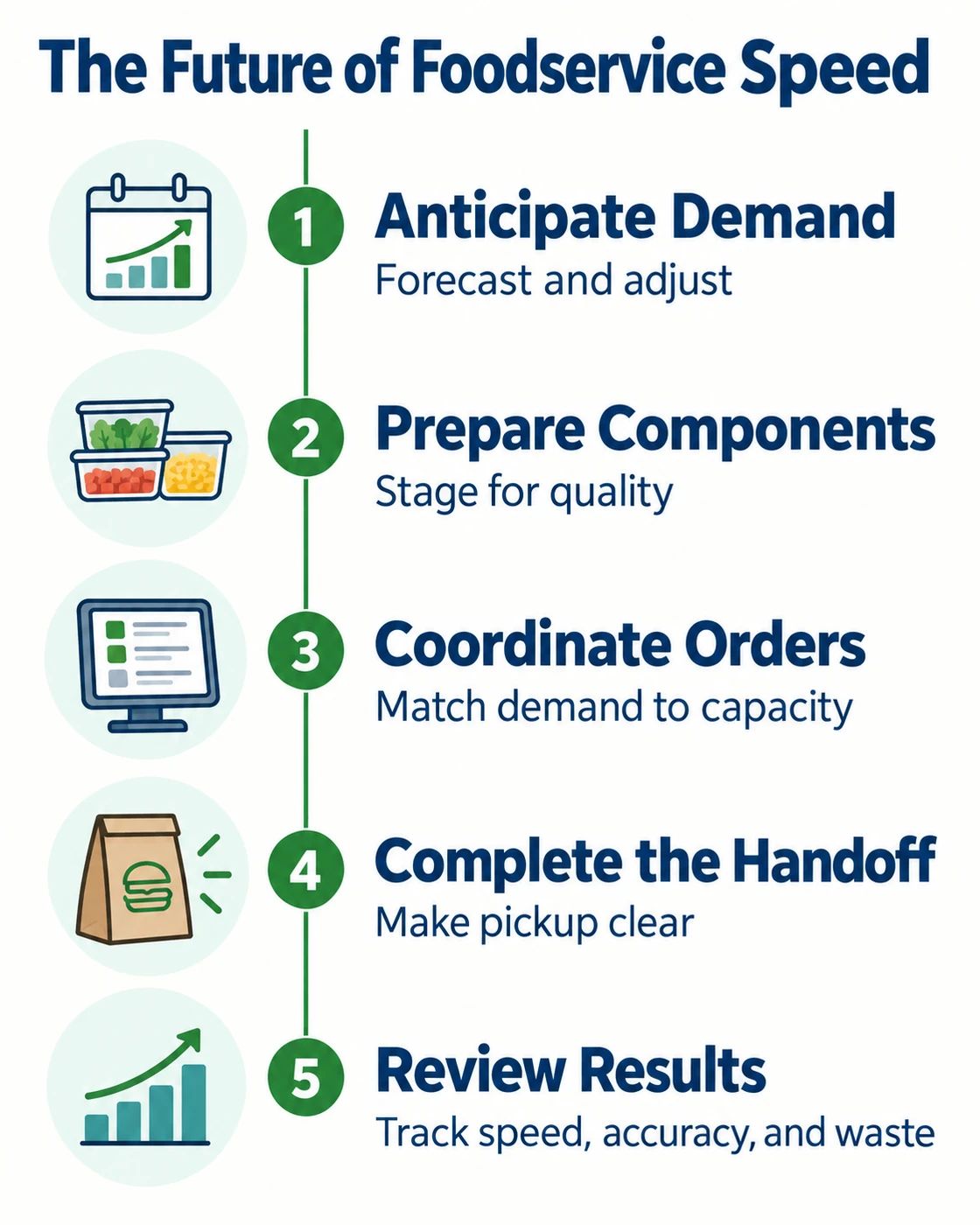
The most useful automation starts with a clearly defined task. Portioning ingredients, timing cooking cycles, or sequencing production can be easier to standardize than an entire meal. Operators should look for repetitive steps that consume attention, create variation, or interrupt employees during peak demand.
Pre-assembly follows the same logic. Preparing approved components before a rush can reduce the number of decisions and movements required after an order arrives. The opportunity depends on the menu: a component that holds well may support preparation in advance, while another may need to remain part of final assembly to protect quality.
Equipment evaluation should include the full work cycle. A faster cooking step offers limited value if loading, cleaning, replenishment, or packaging becomes the next constraint. Ask employees to demonstrate those activities during a pilot. Measure completed orders and labor across the shift, including the time needed to keep the equipment ready.
Digital ordering can move menu selection and payment ahead of arrival, but the kitchen still has to produce the food. When mobile and counter orders enter the same preparation area, their combined workload determines whether the promised pickup time is realistic.
The scale of digital demand is already significant in restaurant foodservice. Chipotle reported that digital sales represented 36.7% of its food and beverage revenue in 2025. That figure illustrates why off-premise ordering needs deliberate operational planning; it should not be treated as a forecast for an individual convenience store. Chipotle’s full-year 2025 results.
For convenience operators, the practical goal is an ordering system that reflects actual production conditions. Pickup estimates should account for outstanding work and available capacity. Menu availability should reflect what the team can fulfill. Employees also need a clear sequence for preparing orders across channels.
The handoff deserves equal attention. Visible pickup instructions, identifiable orders, and a defined place for waiting customers can prevent a completed meal from becoming another service delay.
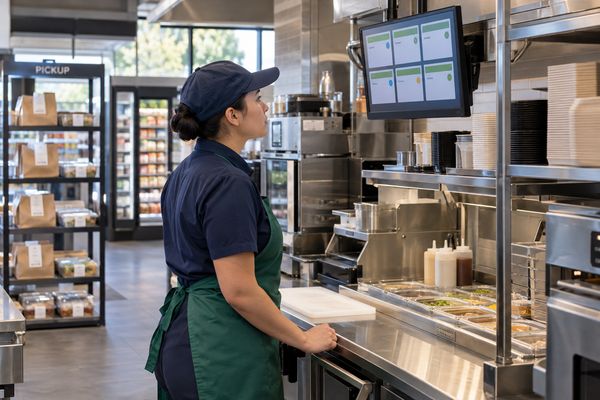
Forecasting tools offer a way to begin preparation closer to when demand will arrive. Historical sales, daypart patterns, promotions, and local conditions can inform estimates of which products a store may need and when. The value comes from translating that estimate into a preparation decision employees can act on.
A forecast is only as useful as the information behind it. Low recorded sales may reflect weak demand, but they may also reflect an unavailable product. If an item sold out early, treating the remaining period as normal demand can lead the next forecast in the wrong direction.
Operators should give teams a simple way to record stockouts, unusual events, and preparation overrides. Compare suggested quantities with actual sales and waste, then review where the recommendation missed. Begin with a limited group of products and allow managers to adjust recommendations. That feedback helps distinguish a promising forecast from a dependable daily process.
Casey’s provides a current example of how a convenience retailer is approaching this combination. In its June 2026 strategic plan, the company identified operational efficiency as a priority and described investments involving AI-supported forecasting and inventory planning, kitchen redesign, and digital tools.
“investing in practical innovations that improve efficiency, strengthen guest experience, and support long-term growth.” — Ena Williams, Casey’s Chief Operations Officer
These are stated investment priorities, rather than proof that every initiative has already delivered a particular service-time improvement. Casey’s three-year strategic plan.
For other operators, the useful takeaway is the connection among the investments. A forecast can inform preparation, a redesigned station can support execution, and an ordering tool can communicate with the customer. Evaluating those relationships helps avoid purchasing a system whose benefits depend on capabilities the store does not yet have.
Customers experience the entire visit. They may judge a meal as slow because ordering was confusing, the pickup area was difficult to find, or nobody could explain when it would be ready. A kitchen timer captures only part of that experience.
Operators should examine the journey from menu selection through departure. Track the difference between the promised pickup time and actual readiness. Observe how often customers need help finding their orders. Review remakes and missing items alongside production speed, because a fast handoff loses its value when the customer must return.
Future service design should also accommodate different preferences. Some guests will use an app; others will order in person or choose prepared food. Clear signs and straightforward choices can make each path easier to navigate. A dependable promise gives customers something they can plan around, particularly during a short breakfast or lunch stop.
Before expanding a technology pilot, define what success means for the store. A useful scorecard combines order completion time, accuracy, food quality, waste, employee workload, and contribution after operating costs. Include performance during the busiest periods, when a system faces its most important test.
Financial evaluation should account for installation, software, maintenance, training, cleaning, and replacement parts. Time saved at one station does not automatically become a reduction in scheduled labor. It may instead allow employees to replenish food sooner, serve more customers, or complete work that previously fell behind.
Resilience also matters. Teams need a workable process when an ordering connection fails, a forecast looks wrong, or equipment requires service. Test that process during the pilot.
Start with one meaningful constraint, establish a baseline, and involve the people who perform the work. Compare similar operating periods and document other changes that could influence results. Expansion becomes easier to justify when managers can explain both the improvement and the conditions required to sustain it.
The future of speed in convenience foodservice will be shaped by coordinated decisions about preparation, equipment, ordering, and the customer journey. The strongest opportunities are those that make daily execution more predictable while protecting the qualities that bring customers back: appealing food, accurate orders, and an easy visit.
Operators can prepare by improving their operating data, identifying where delays accumulate, and testing changes against clear service and financial goals. Technology earns its place when employees can use it consistently and customers experience the result. That is a practical foundation for faster foodservice as menus, channels, and expectations continue to develop.

Subscribe to receive latest news
12968 Vallejo Circle, Westminster CO. 80234
Phone: (303) 604-1064
Contact Us