





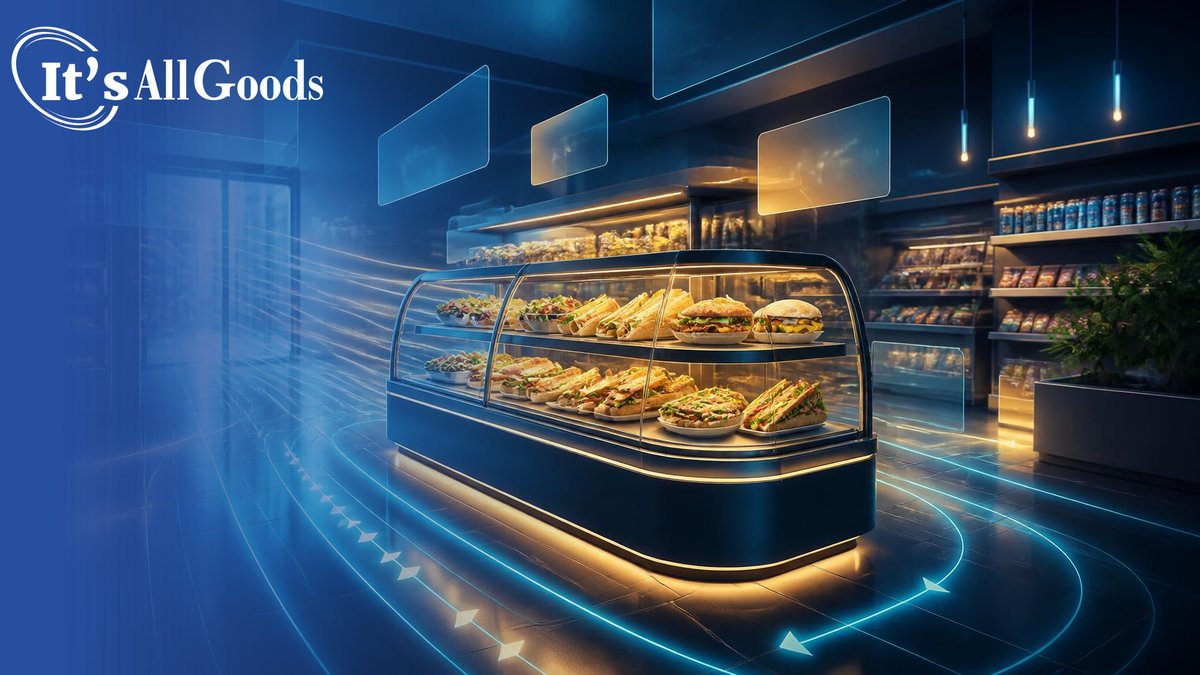
ven a convenience store with a great breakfast sandwich, a fresh lunch case, and a well-priced coffee program can watch customers walk past all of it. The food is there. The problem is that shoppers never really notice it, or notice it too late in their trip to change what they buy.
That gap matters more every year. According to NACS research on today’s convenience shopper, foodservice made up 28.5% of c-store in-store sales in 2025, and nearly 30% of shoppers named hunger as their main reason for visiting a particular store. When food is that central to the business, how it is seen inside the store stops being decoration and becomes part of how the program earns its sales.

Most c-store trips are short and focused. Customers move quickly, often with one item in mind, and they make fast judgments based on what they can see. Steam from a roller grill, a well-stocked warmer, a bright and orderly fresh case, or a clear photo of a signature item all send the same message: food is available, it is fresh, and it is worth a look.
The reverse is also true. A half-empty cooler, a dark corner, or a menu board crowded with small print tells the customer that food is an afterthought here. Shoppers rarely stop to investigate. They simply buy what they came for and leave.
Equipment research points in the same direction. A study by display-case maker Structural Concepts and research firm Kantar, reported in NACS Magazine’s look at rethinking the cold case, found that shoppers were 50% more likely to buy from an open cooler than from a closed-door cooler holding the same items, and spent about 11% more when they did. Because the research comes from an equipment manufacturer, the exact figures deserve some caution, but the principle is hard to argue with.
“People shop with their eyes and they want accessibility.”
— Danielle McMiller, Vice President of Marketing, Structural Concepts
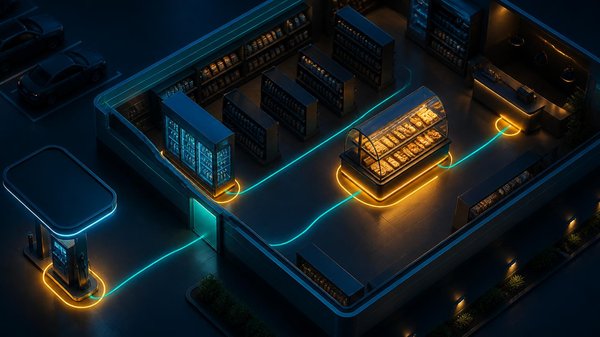
In-store marketing works best when it meets customers at the moments they are actually deciding. In a c-store, those moments are few and predictable: at the pump, at the door, along the path to the cooler or fountain, at the food case itself, and at the register.
Each of those points has a different job. The forecourt has to give a reason to come inside at all. NACS Convenience Voices research on fuel-only customers found that 23.8% of shoppers typically buy only fuel, and that 17.8% of them said better signage or promotions outside could have changed that. Another 16.6% pointed to more visible product offerings, and 21.5% said a bundled food and beverage offer would draw them in.
Inside the store, many food decisions are made on the spot. Datassential’s 2026 c-store research found that more than one-third of consumers buy prepared food items they had not planned to purchase. Among shoppers making unplanned purchases, 33% said they discovered the item while walking around the store, 22% bought something displayed near the register, and 26% were drawn by eye-catching packaging.
Those numbers describe sales that depend almost entirely on the store’s ability to be seen. A customer cannot make an impulse purchase of a product they never notice, and they cannot respond to a promotion they never see.
The two terms are often used interchangeably, but they do different work. In-store marketing tells customers what is available and why it is worth buying: signage, menu boards, promotional messages, price points, and limited-time offers. Merchandising is how the food itself is placed, stocked, and presented: where the case sits, what sits at eye level, how full it looks, and what is placed next to it.
Strong programs need both. Good signage pointing to a poorly maintained case sends customers to a disappointment. A beautiful case with no supporting message may go unnoticed by anyone not already looking for food. As It’s All Goods noted in The Future of Grab-and-Go in Convenience Store Foodservice, merchandising is not decoration. It is conversion design.
Repeat business adds another reason to get both right. The same NACS shopper research found that 41.5% of customers who bought prepared food had bought it before and liked it. That leaves many prepared-food purchases depending on customers trying something they have not yet come to trust, and trial is exactly what clear, visible in-store marketing is designed to produce.
Most foodservice marketing problems are not dramatic. They are small, everyday habits that make the food program harder to see or harder to trust.
Too much signage. When every surface carries a message, customers stop reading any of them. Windows covered in posters can also block the view into the store from the forecourt, removing one of the simplest visual cues a store has.
Outdated or inconsistent messages. A promotion that has ended, a price that no longer matches the register, or a photo of an item that is not available damages confidence in the entire program.
Food placed out of the customer’s path. A fresh case tucked into a back corner, or a warmer blocked by displays, asks customers to go looking for food. Most will not.
Empty or untidy displays late in the day. Customers judge freshness by appearance. A case with a few scattered items at 4 p.m. suggests the food is left over, even when it is not.
Messages that say nothing. Generic phrases like “Fresh Food Inside” compete poorly with a clear item, a clear price, and a clear reason to buy now.
The most effective c-store food programs do more than add signage around the kitchen. They make food the thing customers see, smell, and remember. Visible preparation, open cases, consistent lighting, and a clear focal point help a store communicate that it is a food destination rather than a fuel stop that also sells food.
A visual anchor also organizes the rest of the store. When customers know where food lives, they move toward it, passing beverages, snacks, and other categories along the way. That gives foodservice a role beyond its own sales: it becomes a reason for the trip and a path through the store.
Few retailers use food as a visual anchor as deliberately as Buc-ee’s, the Texas-based travel-center chain. At its stores, barbecue is carved and served throughout the day in a large “pit” in the center of the sales floor, where customers can watch brisket and pork being prepared. When a fresh batch is ready, employees call out “fresh chopped brisket on the board,” turning the preparation itself into a signal that something hot and fresh is available right now.
The approach was on display when the chain opened its first Ohio location in Huber Heights in April 2026. WCPO’s coverage of the opening described the center-store barbecue pit and the brisket call-out as defining features of the experience, with Buc-ee’s spokesman Randy Pauly explaining, “We don’t want to be just another gas station.”
Most convenience retailers will never build a store on Buc-ee’s scale, and they do not need to. The lesson is in the method: put food where customers naturally look, let them see it being prepared or replenished, and give them a clear, simple signal that it is fresh. Those principles work in a small neighborhood store as well as a large travel center.
Foodservice now accounts for a significant share of convenience-store sales, yet many food purchases are still decided in seconds inside the store. Visual cues, clearly placed decision points, and the right balance of marketing and merchandising determine whether customers notice the food program at all.
For operators, the opportunity is practical rather than expensive. Clear messages, uncluttered sightlines, full and well-lit displays, and food placed where customers naturally look can turn existing foodservice quality into visible, repeatable sales. In-store marketing is not a cosmetic exercise. It is how strong food programs get the trial they deserve.
Many foodservice purchases are made on the spot. Customers decide in seconds based on what they see, so food that is hard to find, poorly displayed, or unclear in its message often goes unsold, even when its quality is strong.
In-store marketing communicates what is available and why to buy it, through signage, menu boards, prices, and promotions. Merchandising is how the food itself is placed, stocked, and presented. Effective programs need both working together.
The pump, the entrance, the path toward the cooler or fountain, the food case itself, and the register. Each one is a chance to remind customers that food is available and give them a reason to try it.
Yes. When every surface carries a message, customers tune all of them out, and heavy window signage can block the view into the store. A few clear, current messages usually outperform many competing ones.
No. Clearing sightlines, keeping cases full and well lit, removing outdated signage, and placing food along the customer’s natural path are low-cost changes that can make an existing food program far more visible.

Subscribe to receive latest news
12968 Vallejo Circle, Westminster CO. 80234
Phone: (303) 604-1064





