

onvenience-store customers once approached food largely as an add-on to another mission. They stopped for fuel, a beverage, cigarettes, or a packaged snack, and foodservice benefited from whatever demand happened to be present. That relationship has changed. Prepared food can now determine where customers stop in the first place.
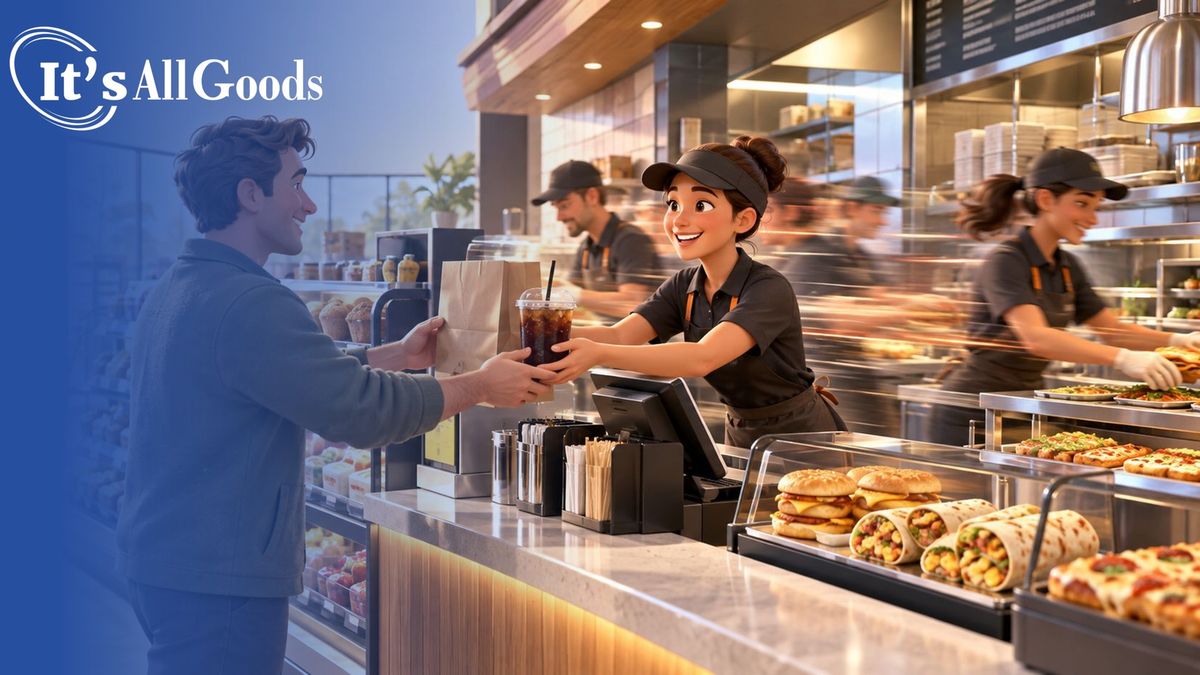
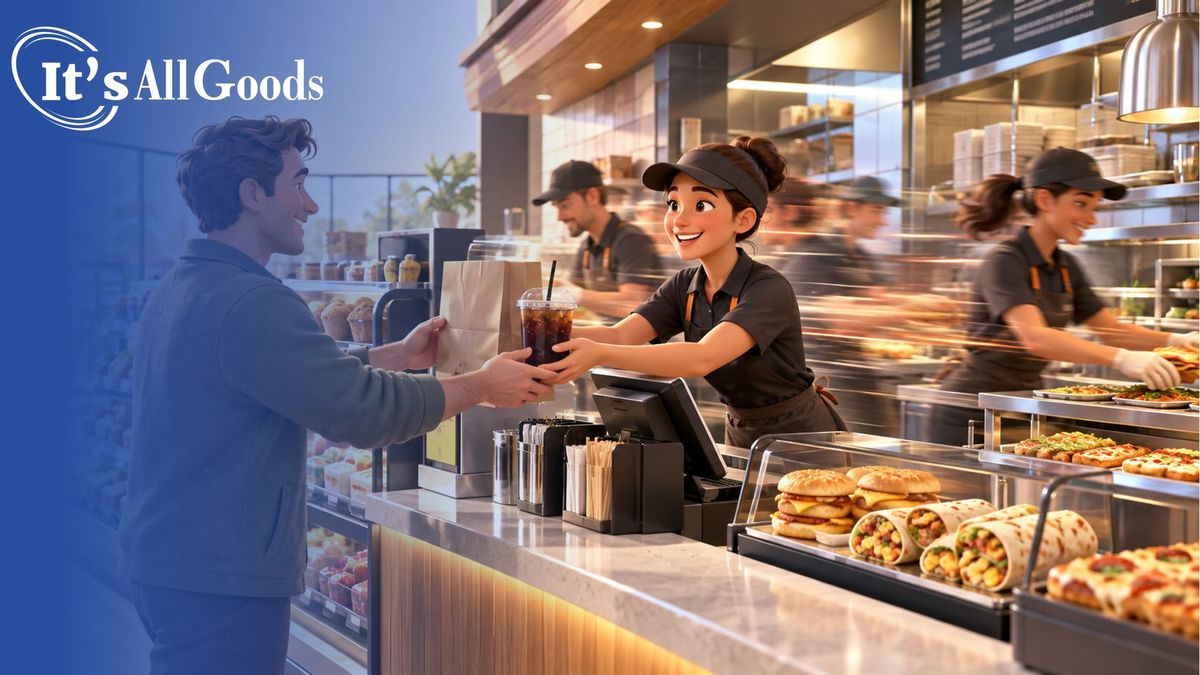
The shift has raised the standard for convenience foodservice. Customers still expect speed, but increasingly they also evaluate freshness, flavor, variety, value, cleanliness, consistency, and the overall ease of the experience. The modern c-store is no longer competing only with another convenience store down the road. For many meal occasions, it is competing directly with quick-service restaurants, grocery prepared-food departments, coffee shops, and other places customers believe can deliver a credible meal quickly.
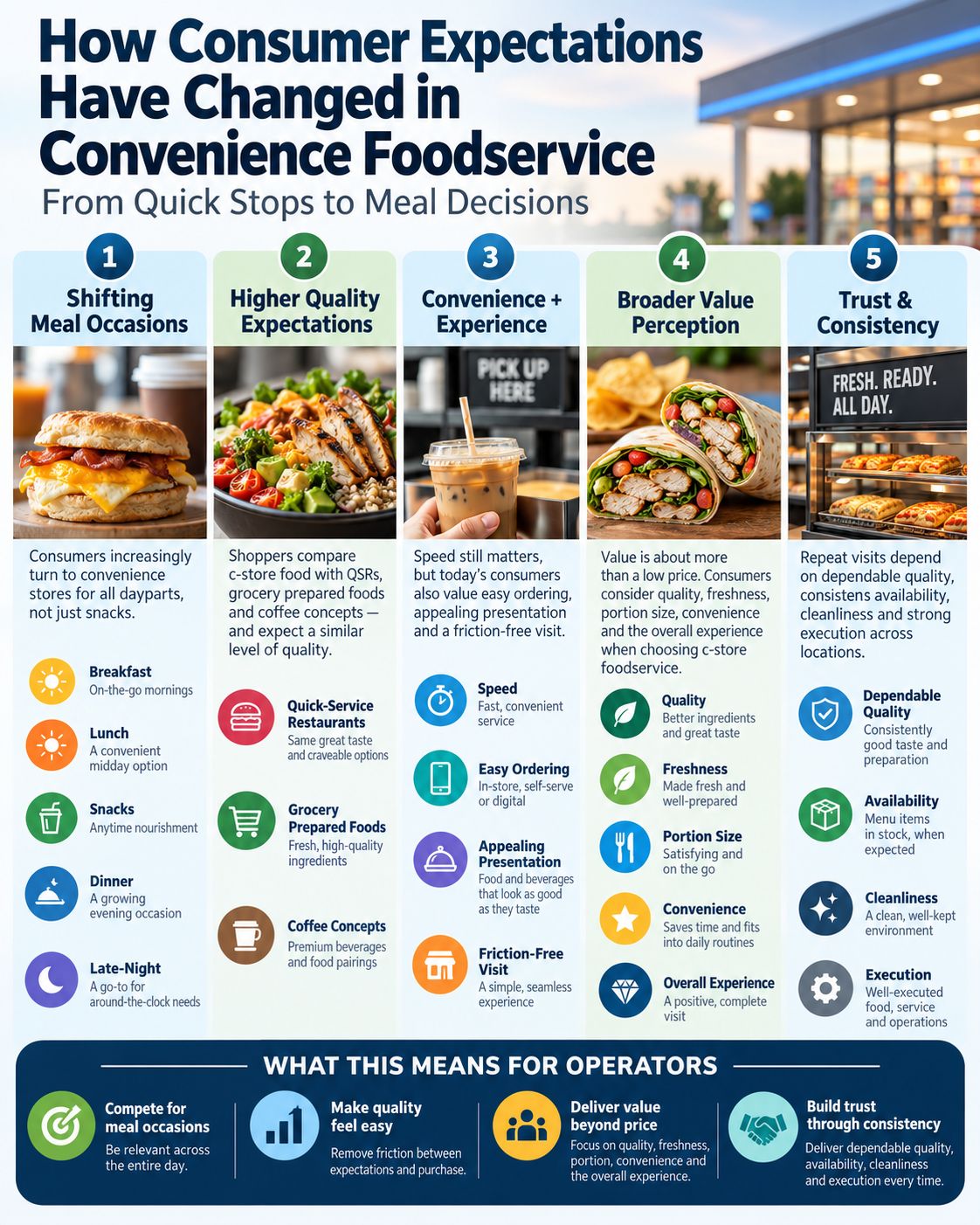
The definition of a convenience-store visit is becoming broader.
Breakfast on the way to work remains important, but customers may also stop for lunch, an afternoon snack, dinner on the way home, or a late-night meal. Traditional meal periods themselves are becoming less rigid as work schedules, commuting patterns, remote work, and lifestyle differences create more eating occasions throughout the day.
Research presented by Technomic illustrates how motivations are changing. In 2024, convenience remained the leading reason consumers chose c-store foodservice and prepared beverages at 31%, but cravings were almost even at 30%. CSP’s reporting on the evolving reasons consumers choose c-store food and beverages also notes that younger consumers are helping drive that shift.
That distinction matters. A customer who buys food only because it happens to be available represents a different opportunity than a customer who actively wants a specific sandwich, pizza, chicken item, coffee, or specialty beverage.
Foodservice becomes much more powerful when it creates the visit instead of merely benefiting from it.
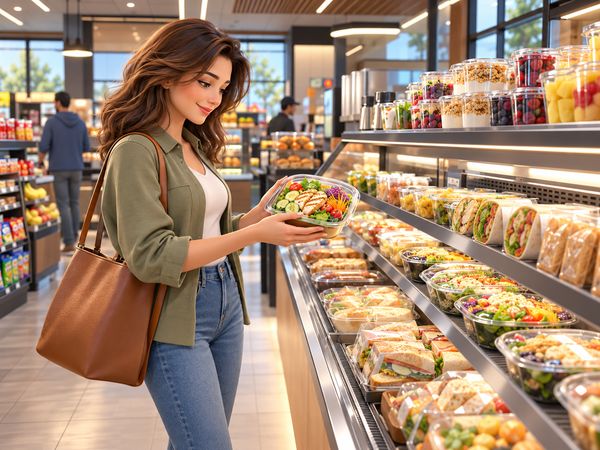
Consumers no longer give convenience stores a separate standard simply because the food is sold beside a fuel forecourt.
The comparison set has expanded. A breakfast sandwich may be judged against a QSR. A salad may be compared with a grocery prepared-food case. Coffee competes with specialty beverage concepts. Pizza competes with dedicated restaurants and delivery.
That does not mean every convenience retailer needs restaurant-level complexity. It does mean the product must be credible on its own merits.
The change is visible in consumer perception. Intouch Insight research discussed at CSP’s 2025 Outlook Leadership conference found that 85% of consumers had tried made-to-order food from a convenience store and 72% viewed c-stores as serious competitors to quick-service restaurants. CSP’s coverage of changing consumer perceptions of c-store foodservice demonstrates how far the channel has moved from the old “gas station food” stereotype.
“It’s now 72% of people who view it as a serious competitor.”
— Cameron Watt, President and CEO, Intouch Insight
Higher expectations create opportunity, but they also reduce the margin for inconsistency. Once customers believe a c-store can provide a quality meal, a disappointing experience is judged against that higher expectation.
Convenience remains foundational. Customers generally do not want a food program that makes a quick trip complicated.
But modern convenience involves more than speed. It includes how easy the menu is to understand, whether the customer can find what they want, whether food looks appealing, how long ordering takes, whether mobile or self-service options work properly, and whether checkout adds unnecessary friction.
Experience and convenience therefore should not be treated as opposites.
A clean foodservice area, attractive presentation, clear signage, intuitive ordering, visible freshness, and an organized pickup process can improve the experience while also making the visit easier.
The challenge comes when retailers add features customers may value but fail to consider the operational cost. Excessive customization, too many menu choices, complicated ordering screens, or an assortment that is difficult to keep available may create the appearance of choice while making the actual customer experience worse.
The strongest foodservice concepts make quality feel easy.
Price sensitivity remains significant, particularly when household budgets are under pressure. But value is not the same as cheapness.
Customers evaluate what they receive for the money they spend: portion size, product quality, freshness, convenience, flavor, reliability, and whether the meal compares favorably with nearby alternatives.
That creates an important opportunity for convenience stores. A customer who can purchase a satisfying meal, beverage, fuel, and other necessities in a single stop may perceive strong overall value even if the food item itself is not the lowest-priced option in the market.
At the same time, retailers cannot assume convenience will compensate indefinitely for weak food. Customers have more alternatives than ever, and QSRs have become increasingly aggressive with value menus, digital promotions, loyalty programs, and mobile ordering.
NACS research highlights that competition clearly. Its 2024 Convenience Voices study found that 28.7% of c-store shoppers intended to visit a QSR within 30 minutes of their convenience-store visit. The leading reasons involved perceived shortcomings in available items and variety, demonstrating that retailers can lose a foodservice purchase even after getting the customer onto the property. NACS Magazine’s examination of foodservice leakage provides a useful reminder that traffic alone does not guarantee the meal sale.
Trial gets attention. Consistency builds a business.
A customer may try a food item because of signage, a promotion, curiosity, or a recommendation. Whether that person buys again depends largely on whether the experience can be trusted.
Trust develops through repeated signals. The food looks fresh. Hot products are hot. Refrigerated products appear properly handled. The store is clean. The item ordered today resembles the one purchased last week. The package is intact. The menu item customers came for is actually available.
Inconsistency damages that trust quickly because food carries a different emotional and safety expectation than many traditional convenience categories.
For operators, this means consumer expectations eventually become operating requirements. Product specifications, holding procedures, equipment reliability, training, replenishment, food safety, and supplier performance all contribute to what the customer experiences as “quality.”
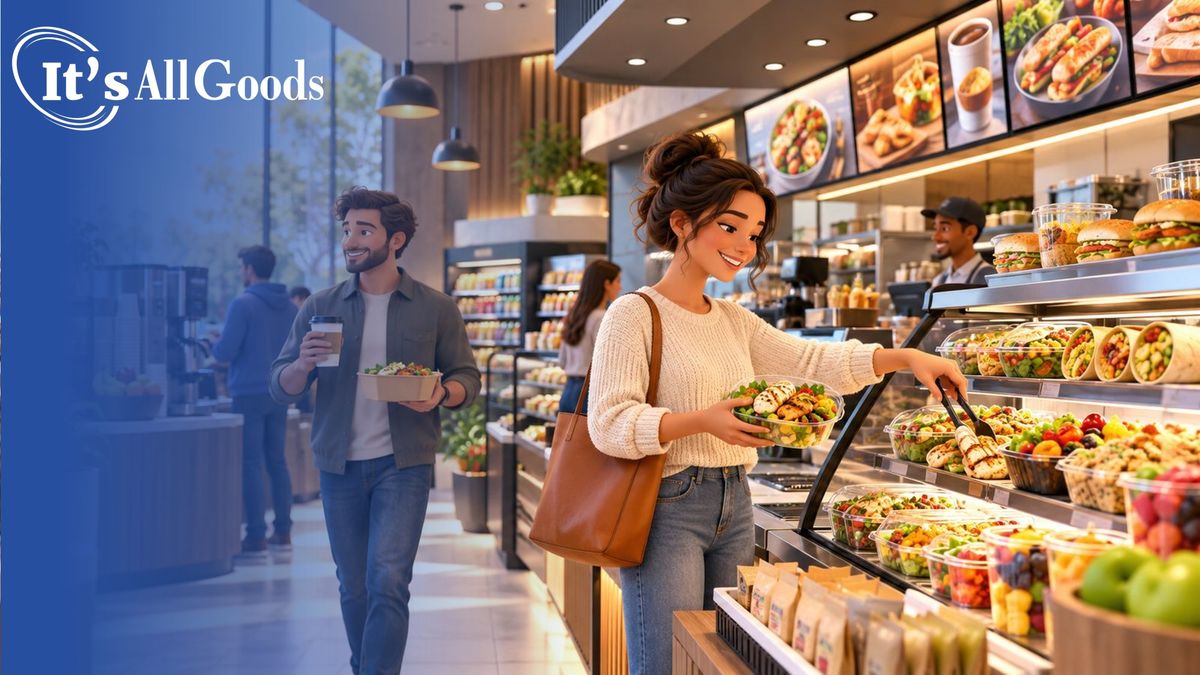
This relationship between fresh food and changing expectations is explored further in It’s All Goods’ Why Fresh and Prepared Foods Matter in Convenience Retail, which examines how grab-and-go and prepared foods increasingly compete for genuine meal occasions.
Brands such as Wawa, Sheetz, Casey’s, and Buc-ee’s have helped change what consumers believe a convenience store can be.
Their approaches differ, but each has demonstrated that food can become a reason to choose the brand rather than simply something purchased during a fuel stop. That success has consequences for the rest of the industry because consumers carry those expectations from one retailer to another.
Location analytics reinforce that relationship. Placer.ai reported that c-store chains investing heavily in food quality, mobile access, pickup options, and loyalty were among the stronger performers in visitation trends. The lesson is not that every retailer should duplicate a large regional chain. It is that consumers increasingly reward food programs that feel intentional rather than incidental.
Smaller and independent operators can compete on the same principles without copying the same scale: a focused menu, dependable quality, a clean environment, local relevance, fast execution, and a product customers can trust.
The most important change in convenience-store foodservice is not simply that consumers are buying more prepared food. It is that they increasingly believe convenience stores are legitimate places to make meal decisions.
That belief creates a larger opportunity—and a higher standard. Retailers that combine the traditional strengths of convenience with credible quality, value, choice, and consistency can compete for occasions that once belonged almost automatically to restaurants. The operators that understand what customers actually expect, rather than what the industry assumes they expect, will be best positioned to earn both the first purchase and the next one.
Customers still expect speed and convenience, but they increasingly also look for freshness, quality, value, variety, cleanliness, consistency, and an easy overall experience.
Yes. Customers increasingly compare c-store food with QSRs, grocery prepared foods, coffee shops, and other foodservice options when deciding where to purchase a meal.
Not necessarily. A focused menu that is easy to execute consistently can create a stronger customer experience than a broad assortment that introduces availability, quality, or service problems.
Price remains important, but customers often define value more broadly. Portion size, quality, freshness, convenience, reliability, and the ability to complete multiple purchases in one stop can all influence perceived value.
Consistency creates trust. Customers are more likely to return when they know the food, availability, cleanliness, and overall experience will meet the same standard from one visit to the next.

Subscribe to receive latest news
12968 Vallejo Circle, Westminster CO. 80234
Phone: (303) 604-1064