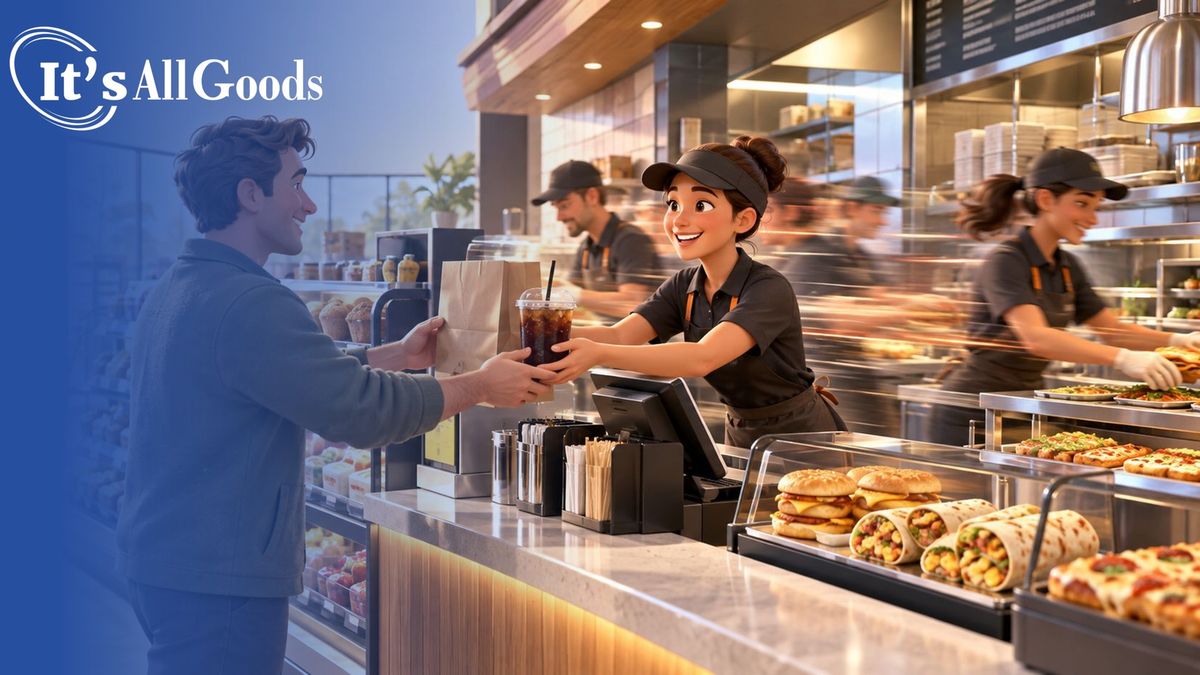


he convenience food customer of the future will probably not abandon the qualities that built the channel. Speed, accessibility, value, and ease will remain fundamental. What is changing is the number of other expectations customers increasingly bring into the same transaction.
Consumers are becoming accustomed to personalized digital experiences, greater visibility into ingredients, flexible ordering, relevant promotions, broader food choices, and frictionless payment. At the same time, many still want the basic convenience-store experience to remain simple. The challenge for retailers is therefore not to predict every emerging trend. It is to recognize which behaviors are becoming durable enough to influence foodservice strategy—and which innovations create more complexity than customer value.
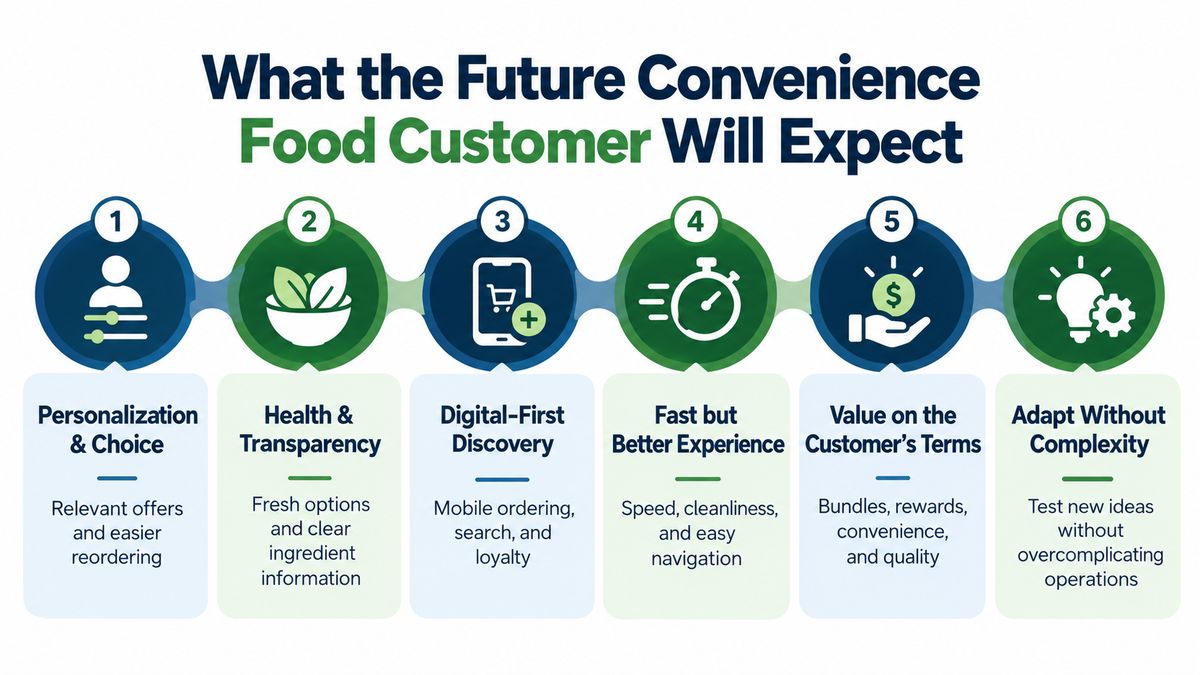
For years, convenience-store choice was largely defined by assortment: more flavors, more sizes, more products and more menu combinations.
The next stage of choice is likely to become more personal.
Loyalty programs already allow retailers to understand when customers visit, what they purchase, which promotions they respond to, and how frequently they return. That information can increasingly shape offers, menu recommendations, bundles, and communications around the individual shopper rather than the entire customer base.
At the 2026 NACS Convenience Summit Asia, BCG's Allen Zhang described personalization as increasingly important throughout the digital customer journey, including product recommendations and rewards tailored to individual purchasing patterns. NACS Magazine’s coverage of the summit describes personalization as a factor that can influence whether customers visit.
“Personalization has become a visit-deciding factor.”
— Allen Zhang, BCG
That does not necessarily mean every customer wants a complicated customized meal. Personalization can be as simple as remembering a preferred beverage, offering a relevant breakfast bundle, presenting a promotion at the right time of day, or making it easier to reorder something previously purchased.
The opportunity is relevance, not limitless choice.
Too many choices can slow ordering, increase ingredient requirements, complicate training, and weaken consistency. Future foodservice programs will need to distinguish between personalization that makes the experience easier and customization that creates unnecessary operational friction.
Health expectations are also becoming more nuanced.
The traditional divide between “healthy food” and “indulgent food” is weakening. Customers may choose a protein-focused breakfast in the morning, an indulgent snack in the afternoon, and a lighter dinner later in the day. What matters increasingly is the ability to make a choice that fits the occasion.
Technomic research reported by CSP found that 45% of c-store consumers expected convenience stores to offer healthy foodservice items, up from 40% in 2022. At the same time, retailers have learned that simply introducing products labeled as better-for-you does not guarantee demand. CSP’s reporting on healthier c-store foodservice expectations highlights both growing consumer interest and the need to build a viable business strategy around it.
That distinction will be important going forward.
Consumers may increasingly look for protein, hydration, recognizable ingredients, portion options, ingredient information, or products that simply appear fresh and balanced. But retailers should be cautious about building large specialized assortments around every wellness trend.
Transparency may ultimately be more durable than any single definition of healthy.
Clear ingredient information, recognizable preparation, appropriate labeling, and honest product descriptions allow customers to make their own decisions. The retailer does not have to define the perfect diet. It needs to make the choice understandable.
This builds on the broader shift toward fresh and prepared foods explored in It’s All Goods’ Why Fresh and Prepared Foods Matter in Convenience Retail, where quality and freshness increasingly influence whether convenience stores are viewed as credible meal destinations.
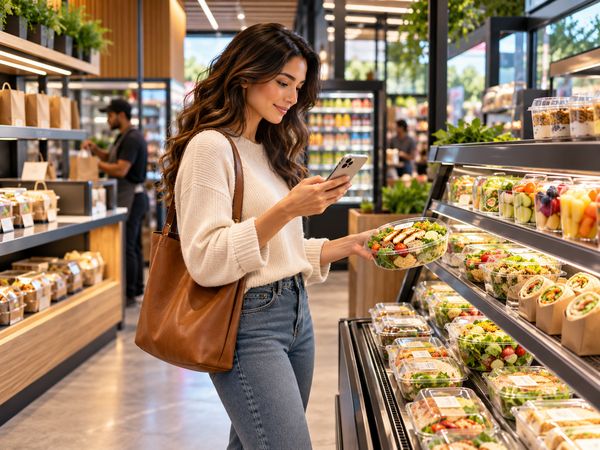
The future foodservice transaction may begin long before the customer walks through the door.
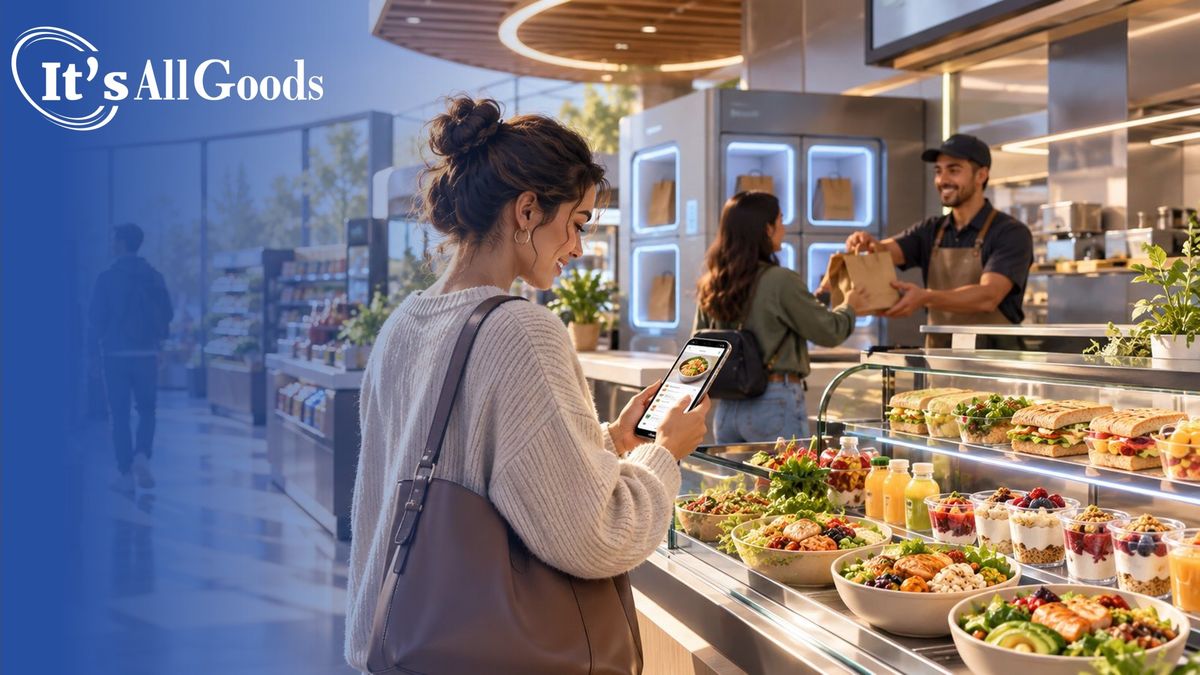
Customers increasingly discover restaurants and retailers through mobile search, maps, loyalty applications, delivery platforms, social media, and digital offers. Convenience foodservice is moving into that same competitive environment.
CSP reported in 2026 that c-store digital ordering was growing 25% year over year, with 34% of convenience-channel customers having ordered through a mobile app. CSP’s coverage of digital ordering and product discovery shows how quickly the digital channel is becoming part of the convenience-store foodservice experience.
This changes the definition of visibility.
A retailer may have an attractive foodservice program inside the store, but a customer choosing dinner from a phone may never see it if the menu, pricing, hours, availability, or ordering options are not represented digitally.
Digital technology can also compress the customer journey. A loyalty notification may create awareness. A personalized offer may generate interest. Mobile ordering may eliminate the wait. Stored payment may shorten checkout. The customer arrives with much of the purchase decision already made.
The best technology will therefore become less noticeable, not more.
Customers are unlikely to reward technology simply because it is sophisticated. They will reward it when it removes steps, improves relevance, increases confidence, or saves time.
NACS recently described the broader objective as meeting consumers on their own terms across loyalty, order-ahead, payment, and connected experiences in its discussion of designing the convenience industry’s digital ecosystem.
Convenience stores will not stop competing on speed.
The channel's geographic accessibility and quick transaction remain powerful advantages. But as foodservice becomes more important, customers may increasingly judge the quality of the time they spend in the store as well as the amount of time.
That includes cleanliness, employee interaction, ease of navigation, attractive food presentation, confidence in freshness, ordering clarity, and whether the store feels organized.
NACS research into the convenience-store experience continues to emphasize the channel's traditional advantages of proximity and speed while examining the broader factors customers associate with a positive store visit.
Service is part of that equation. Technomic research reported by CSP found that 88% of shoppers in 2025 considered friendly service important or very important when choosing a convenience store, up from 83% in 2023. CSP’s coverage of service as a differentiator reinforces the continuing importance of human interaction.
The future customer may therefore expect two things that once seemed contradictory: greater automation and greater humanity.
Self-checkout, order-ahead, kiosks, and personalized applications can eliminate routine friction. Employees can then become more important in the moments when customers actually need assistance, reassurance, product knowledge, or problem resolution.
Technology and service do not have to compete. Properly designed, one creates more room for the other.
Value is also becoming more difficult to define with one price point.
Some customers will prioritize the lowest possible cost. Others will consider portion, quality, time saved, loyalty rewards, convenience, or the ability to complete several errands in one stop.
Economic pressure is already affecting behavior. Recent NACS shopper research found that 39.8% of shoppers changed how they used the convenience channel because of their financial situation, while 63.3% said they had begun using loyalty programs, coupons, or promotions to help manage spending. NACS’ look at today’s convenience shopper illustrates how value behavior can extend well beyond the shelf price.
That suggests future value strategies will need to become more flexible.
One customer may respond to a bundled meal. Another may want loyalty points. Another may pay more for a premium prepared item because it replaces a restaurant visit. A commuter may place greater value on saving five minutes than saving fifty cents.
Retailers that understand these differences can avoid treating discounting as the only value strategy.
Strong foodservice value comes from matching price, portion, quality, convenience, and occasion in a way the customer understands.
The greatest strategic risk may be trying to respond to every trend simultaneously.
Personalization, artificial intelligence, wellness, delivery, mobile ordering, ingredient transparency, customization, automation, premium foods, value menus, and new dayparts can all represent legitimate opportunities.
They also require systems, equipment, training, suppliers, data, labor, and management attention.
A retailer that reacts to every new behavior can quickly build a foodservice operation that is difficult for employees to execute and confusing for customers to navigate.
The better approach is disciplined experimentation.
Retailers can test new products, ordering methods, promotions, dayparts, or technology with limited pilots. Loyalty and transaction data can help determine whether an idea generates trial, repeat purchase, larger baskets, or new visits. Store teams can identify whether the concept creates unexpected preparation or service problems.
The future customer should influence the operating model, but speculation about that customer should not destabilize the operation.
The strongest programs will likely evolve through repeated small adjustments rather than constant reinvention.
The future convenience food customer will expect more, but not necessarily more complexity.
Customers are likely to want food that feels relevant to them, information that helps them make decisions, digital tools that remove friction, value that fits their priorities, and an experience that remains fast and dependable. They may simultaneously expect technology to become more sophisticated and the act of buying food to become simpler.
For convenience retailers, the strategic opportunity is not to predict every preference before it happens. It is to build a foodservice platform capable of learning and adapting without losing operational discipline.
The retailers best prepared for the future will understand customer behavior, test thoughtfully, use data intelligently, protect the fundamentals of speed and consistency, and add new capabilities only when they make the customer experience meaningfully better.
Customers are likely to continue valuing speed and accessibility while placing greater importance on personalization, food quality, ingredient transparency, digital convenience, value, and a consistent overall experience.
Not necessarily. Personalization can include relevant loyalty offers, preferred products, recommended bundles, easier reordering, and promotions based on purchasing behavior without creating complicated made-to-order menus.
Digital ordering is already growing within the convenience channel. As customers increasingly discover and purchase food through mobile devices, accurate digital menus, order-ahead capabilities, loyalty integration, and simple payment experiences may become more important competitive tools.
Probably not. Consumers often make different choices for different occasions. The greater opportunity may be providing a balanced assortment and clearer information so customers can choose between indulgent, fresh, protein-focused, portion-controlled, or other options.
Test new ideas selectively, measure customer response and operational impact, use existing sales and loyalty data, involve store teams in evaluation, and expand only the concepts that provide meaningful customer and business value.

Subscribe to receive latest news
12968 Vallejo Circle, Westminster CO. 80234
Phone: (303) 604-1064