






onvenience store foodservice has grown faster than the leadership models that support it. Kitchens now run made-to-order menus, multiple dayparts, and loyalty-driven promotions, yet many stores are still led the way they were when food meant a roller grill and a coffee pot: one manager carrying most of the decisions, learning the job by doing it, and coaching when there is time. That model is under strain. Managers are stretched across more responsibilities, frontline turnover remains high, and new tools are changing how work gets planned and measured. The next phase of foodservice leadership will depend less on a single heroic manager and more on systems that spread leadership across the team, develop people deliberately, and use data to make coaching faster and fairer.
This article looks at five shifts shaping that future: distributed leadership, the development of future leaders, data-informed coaching, culture at scale, and the habits that keep accountability strong over time. A case study shows how a Virginia operator uses peer coaches to support its foodservice teams.

The manager role is getting harder to sustain on its own. Gallup’s 2026 global workplace analysis found that manager engagement fell from 31% in 2022 to 22% in 2025, while engagement among individual contributors barely moved, from 20% to 19%. Gallup links lower manager engagement to wider spans of control and recommends that organizations prioritize manager selection, training, and support.
Distributed leadership is one practical response. Instead of routing every decision through the store manager, operators give defined leadership roles to shift leads, kitchen leads, and experienced team members: a food safety champion who checks logs, a trainer who onboards new hires at the sandwich station, a daypart lead who owns the lunch rush. These roles do not replace the manager. They extend the manager’s reach, keep standards alive on shifts the manager does not work, and give promising employees a visible first step on a leadership path.
The key is clarity. Each distributed role needs a defined scope, a small amount of real authority, and recognition, whether through pay, title, or both. Without those, “helping out” quietly becomes unpaid extra work, and the people most likely to lead are the first to burn out.
Many foodservice leaders are promoted because they were excellent at the job below, not because anyone prepared them to lead. Gallup’s research on how managers affect team productivity found that only 44% of managers globally had ever received management training as of 2025. Among U.S. frontline supervisors, 65% said they got their role through performance or tenure, compared with 30% through supervisory skills, and those selected for skills were more engaged, at 42% versus 31%. Gallup also found that managers who completed a strengths-based development program had 21% to 28% lower employee turnover than their peers.
The convenience industry is investing at the top. NACS partners with several business schools on executive education, including a marketing leadership program at Northwestern University’s Kellogg School of Management that about 40 members attend each year, according to a June 2026 Kellogg article. The same article noted that demand from Circle K executives exceeds the six spots available to the company each year in one Kellogg program.
The bigger opportunity is closer to the kitchen. Shift leads and kitchen managers need practical training in coaching, scheduling, food cost, and food safety before they are promoted, not after. Operators that build a clear path from team member to shift lead to manager, with skills taught at each step, create a bench of leaders who already know the standards and the culture.
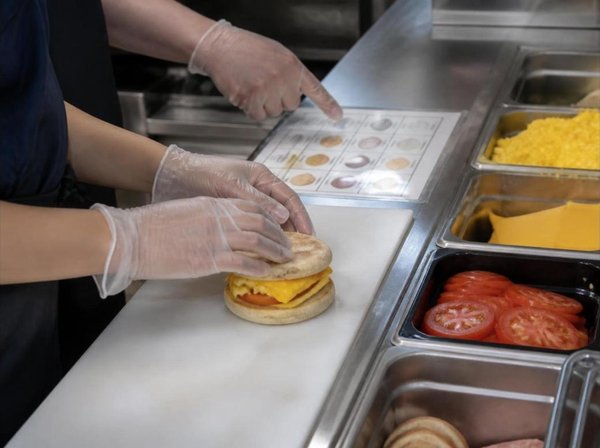
Technology is starting to change how managers coach, not just how they track results. According to NACS Magazine’s September 2026 issue, AI assistants can now answer employee questions about procedures in multiple languages, and some tools can alert managers and store leads to training gaps. Babir Sultan, president and CEO of Fav Trip, a five-store operator in the Kansas City area, uses AI role-play tools to help employees and managers practice difficult conversations. The same article suggested using AI to recognize overnight staff whose good work managers rarely see.
Managers are also central to whether these tools get used at all. In Gallup’s first-quarter 2026 U.S. survey, whether a direct manager actively championed AI was the strongest predictor of employee AI use, apart from technical integration. In foodservice, that means a forecasting tool or digital checklist will only change behavior if the manager uses it visibly and explains why it matters.
Used well, data makes coaching more specific and fairer. A manager who can see that waste spikes on Sunday evenings, or that one station’s ticket times lag during the breakfast rush, can coach the right people on the right issue. Used poorly, the same data becomes surveillance. The difference lies in whether numbers start a conversation or replace one.
Culture is easiest to protect in a single store with an owner on the floor. It becomes harder as operators add locations, enter new markets, or acquire other chains. The habits that once spread through daily contact now have to be taught, written down, and reinforced through systems.
Operators that keep culture consistent at scale tend to make it concrete. They describe it in behaviors rather than slogans, build it into onboarding and recognition, and measure it with tools such as regular engagement surveys. They also invest in the people who carry culture day to day: shift leads and trainers who show new hires how things are done. Gallup’s research suggests the stakes are large. It estimated that low engagement cost the global economy about $10 trillion in lost productivity in 2025.
Accountability systems tend to fade after the launch. Scorecards stop being reviewed, huddles get skipped during busy weeks, and coaching calls slide off the calendar. As It’s All Goods outlined in Building Accountability Into Foodservice Operations, accountability depends on clear roles, short scorecards, coaching before consequences, and steady follow-up. Sustaining it requires treating those routines as part of the operating rhythm rather than as a special project.
Future-ready operators will build accountability into the tools leaders already use: scorecards that update automatically, reminders tied to the schedule, and recognition that is easy to give. They will also share ownership of it. When shift leads and peer coaches help reinforce standards, accountability no longer depends on one manager’s energy.
A simple test helps: if the store manager took two weeks off, would the scorecard still be reviewed, the huddles still happen, and the hold times still be checked? Operators that can answer yes have built accountability into the team rather than into one person. Those that cannot have a clear starting point for the next round of leadership development.
Tiger Fuel Company, based in Charlottesville, Virginia, operates The Markets, a gourmet-to-go convenience brand that began with the Bellair Market in 1991 and now has ten locations known for signature sandwiches, according to its NACS Show speaker profile for Maurice Lamarche, vice president of retail operations. Lamarche spent more than 25 years in restaurants and hospitality before joining the company in 2017.
Tiger Fuel has built a layer of distributed leadership through its market coach program, as described in NACS Magazine. Team members become eligible after six months on the job and must be nominated by their store or district manager before going through an interview. Market coaches help new hires through their shifts, answer questions, and show them the ropes, supplementing the store leadership team and formal training. They earn an extra 50 cents an hour and attend semiannual meetings. The company also offers a $10 meal voucher per shift, an on-site employee health center starting at $6 a month, and quarterly engagement surveys.
Tiger Fuel reported frontline retail turnover of 63% in 2024, compared with an industry figure of 118.2% for full-time sales associates from the NACS State of the Industry Talent Insights Dashboard. Lamarche summed up what he believes keeps people in a job:
“It’s how you were treated on your worst day.”
— Maurice Lamarche, Vice President of Retail Operations, Tiger Fuel Company
The article does not isolate how much of that turnover gap comes from the market coach program versus pay, benefits, or other factors. The model still illustrates where foodservice leadership is heading: experienced team members trained and paid to lead at the shift level, a clear first step on a leadership path, and a culture defined by how people are supported when things go wrong. Lamarche is also scheduled to speak at the October 2026 NACS Show on a food safety playbook for smaller operators that covers training, daily execution, and accountability.
The future of foodservice leadership in convenience retail will be shared, developed, and supported by better tools. Managers alone cannot carry every standard on every shift, especially as their own engagement declines and their responsibilities grow. Operators that spread leadership across shift leads and peer coaches, train people before promoting them, and use data to make coaching specific will build stronger and more resilient foodservice teams.
Culture and accountability will need deliberate care as operators grow. The leaders who succeed will make culture concrete, keep accountability routines on the calendar, and treat the people who lead at the shift level as the foundation of foodservice execution.
Distributed leadership gives defined roles, such as kitchen lead, trainer, or food safety champion, to team members beyond the store manager, so standards are led on every shift.
Many managers are promoted without training. Gallup found that only 44% of managers globally had ever received management training, and development programs were linked to lower turnover.
AI tools can answer employee questions, flag training gaps, and help managers rehearse difficult conversations. They work best when managers use them visibly to start coaching conversations.
By describing culture in specific behaviors, building it into onboarding and recognition, measuring it with engagement surveys, and investing in shift leads and trainers who model it daily.
Tiger Fuel nominates experienced team members as market coaches who help new hires through their shifts. Coaches earn an extra 50 cents an hour and attend semiannual meetings.

Subscribe to receive latest news
12968 Vallejo Circle, Westminster CO. 80234
Phone: (303) 604-1064





