





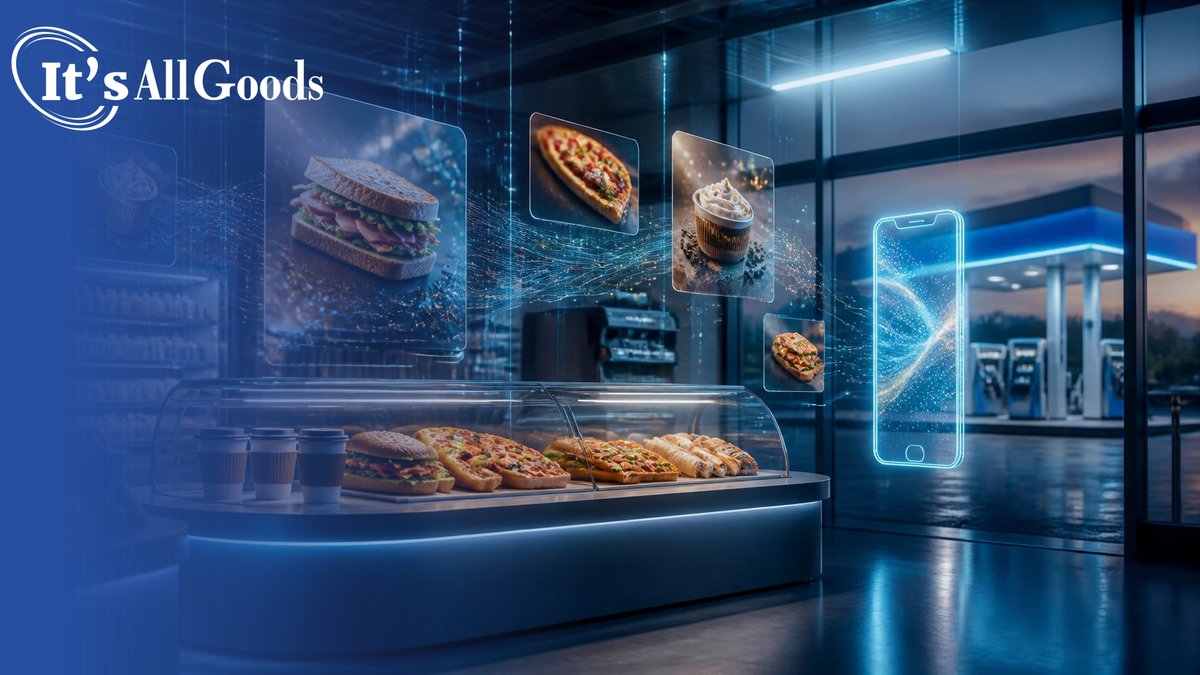
rinted posters and static menu boards have carried convenience-store foodservice marketing for decades. They are cheap, simple, and familiar, but they cannot change with the time of day, respond to what is selling, or speak to the customer standing in front of them. That is starting to change.
Digital screens, loyalty data, and new measurement tools are giving convenience retailers ways to market food inside the store that look more like modern digital marketing than traditional signage. The opportunity is real. So is the risk of adding complexity, cost, and clutter without a clear purpose. The retailers that benefit most will be the ones that treat these tools as a way to sharpen the basics, not replace them.
The most immediate change is the screen itself. Digital menu boards and in-store displays can switch from breakfast to lunch automatically, highlight items that are hot and ready, and remove an offer the moment it sells out. A printed sign cannot do any of that.
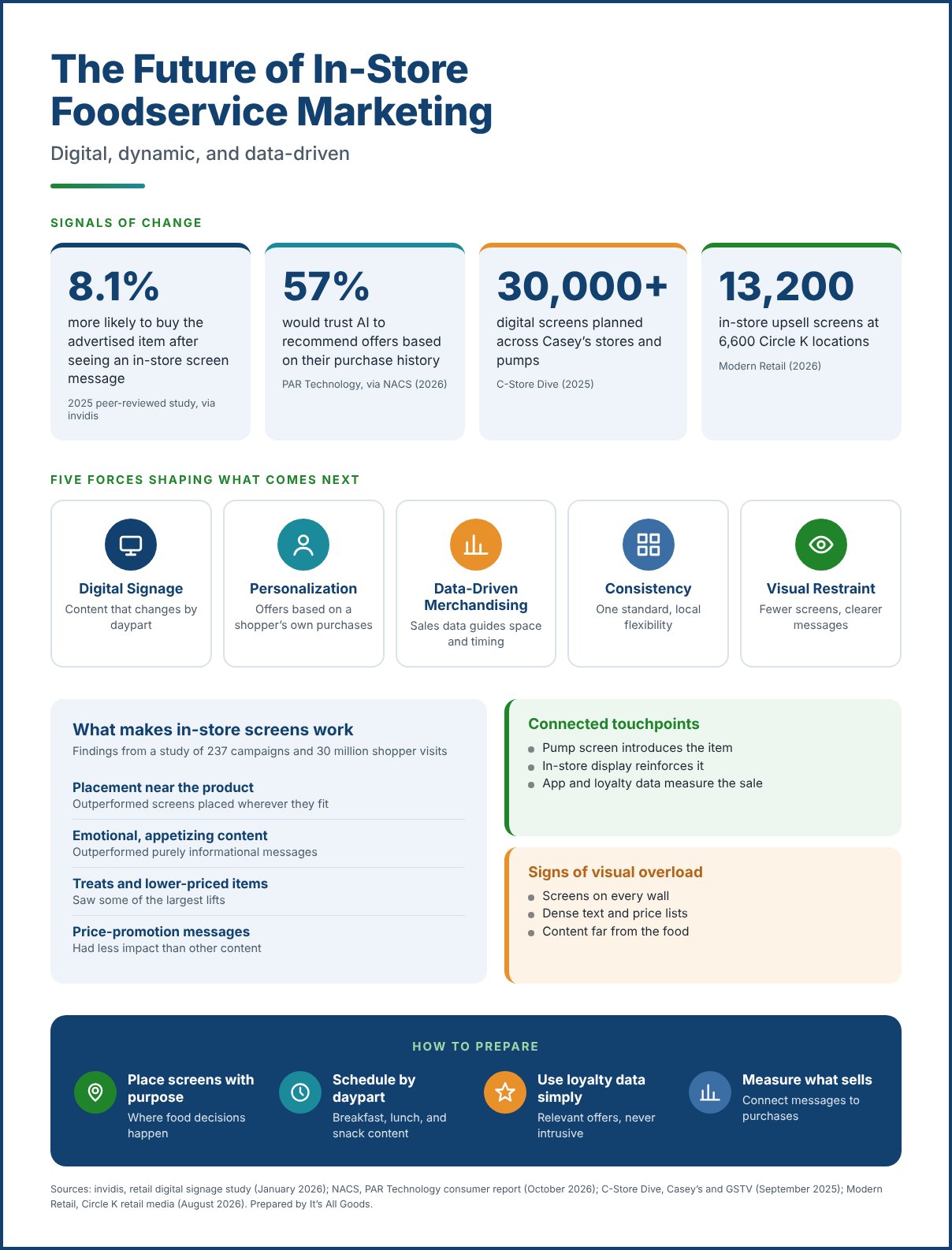
Evidence that screens influence purchases is getting stronger. A peer-reviewed 2025 study described by invidis in January 2026 tracked 237 in-store advertising campaigns across roughly 30 million shopper visits and found that shoppers exposed to a screen message were 8.1% more likely to buy the advertised item. Treats, specialty items, and lower-priced products saw some of the largest gains, a profile that fits much of c-store foodservice.
The same research offers a useful warning. Emotional messaging outperformed purely informational content, and price-promotion messages on screens had less impact. Screens placed near the products they promoted also performed better than screens placed wherever they happened to fit. A screen showing a hot, freshly made sandwich beside the warmer is likely to do more than a screen near the door cycling through discounts.
Large chains are already building at scale. According to Modern Retail’s August 2026 report on Circle K’s retail media network, Circle K has installed 13,200 in-store “Lift” upsell screens across 6,600 U.S. locations, alongside digital walls and screens at more than 3,800 fuel pumps.
Personalization has long belonged to apps and email. Increasingly, it is moving into the store through loyalty programs, mobile offers delivered on arrival, and screens that can respond to time of day, weather, or local demand.
Customers are more open to this than many retailers assume, as long as it is based on their own behavior. PAR Technology’s 2026 consumer research, reported by NACS in October 2026, found that 57% of c-store customers would trust AI to recommend personalized offers based on their purchase history, and 18% named personalized loyalty rewards as a reason they would switch stores. Comfort dropped, however, when personalization relied on broader personal data.
For foodservice, the most practical personalization will often be simple: a breakfast offer sent to a loyalty member who regularly visits before 8 a.m., a reminder about a favorite item, or a bundle that pairs a customer’s usual drink with a new food item. These offers work because they feel useful rather than intrusive.
“Retail media works when you have a compelling enough retail offer to drive people into the store in the first place.”
— Frank Beard, Principal, Konbini Strategy
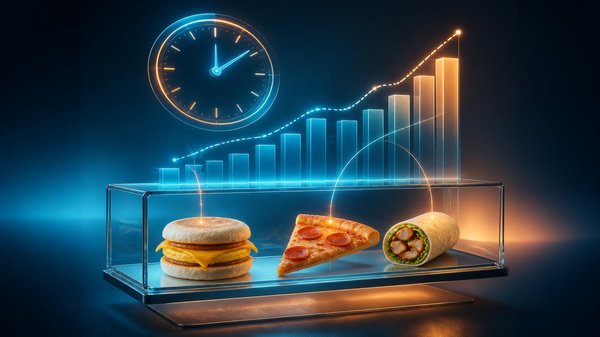
The quieter revolution may be in what retailers learn, not what customers see. Point-of-sale data, loyalty transactions, and connected screens can show which items sell at which hours, which pairings customers actually buy, and which promotions change behavior rather than simply discounting purchases that would have happened anyway.
That information can shape everyday merchandising decisions: which items earn eye-level space, when to move breakfast out and lunch in, how much to produce for each daypart, and which promotions to repeat or retire. Over time, it can replace guesswork with evidence and help operators reduce both out-of-stocks and waste.
Measurement is the piece the industry is still building. Many convenience retailers are working toward what the advertising world calls closed-loop measurement, which connects a message on a screen to a purchase at the register. The ones that get there first will know not only what they promoted, but what it actually sold.
Casey’s, the third-largest U.S. convenience store chain with more than 2,900 stores in 19 states, offers a view of where in-store marketing is heading. The company launched its retail media network, Casey’s Access, in 2023, giving brands a way to reach Casey’s shoppers through display ads, sponsored products, app placements, and in-store media, supported by what the company describes as more than six billion shopper data points.
In 2025, Casey’s partnered with GSTV to add branded video to its fuel dispensers. As C-Store Dive reported in September 2025, the expansion was expected to bring the network to more than 30,000 digital screens across its stores once the rollout was complete. Justin Coaldrake, senior director of omnichannel guest experience and media at Casey’s, described the effort as part of a retail media journey that “began in 2023 with the launch of Casey’s Access.”
The significance for foodservice is the connection. When pump screens, in-store displays, the app, and loyalty data work together, a retailer can introduce a new pizza or breakfast item at the pump, reinforce it inside the store, and measure whether customers bought it. Most operators will not build a network of this size, but the principle of connecting each customer touchpoint into one consistent message applies at any scale.
Digital tools make consistency easier, and they also make inconsistency more visible. A centrally managed screen network can update prices, swap promotions, and retire expired offers across every store at once, eliminating the outdated paper sign that lingers for weeks. As covered in It’s All Goods’ Merchandising Foodservice for Maximum Impact, consistent messaging is what turns a promotion into a habit.
Central control still needs local judgment. A store near a school, a highway travel stop, and an urban location will not sell the same food at the same hours. The strongest approach is likely to be a shared brand standard with room for local assortment and daypart timing, so every store looks and sounds the same while still featuring what its own customers buy.
The biggest risk of digital in-store marketing is doing too much of it. Screens are easy to add and easy to fill, and a store with moving images on every wall can overwhelm the customers it is trying to reach. When everything is animated, nothing stands out.
A few principles can keep digital marketing effective. Give each screen one job. Keep foodservice content close to the food. Favor appetizing imagery over dense text and price lists. Limit how many screens are visible from any single spot in the store. Above all, make sure the food itself still looks as good as the screen promises, because no display can make up for an empty warmer or a stale case.
In-store foodservice marketing is becoming more digital, more dynamic, and more measurable. Screens can respond to the time of day, loyalty data can make offers more relevant, and better measurement can show which messages actually sell food. Large chains such as Casey’s and Circle K are already connecting these tools into networks that reach customers from the pump to the register.
For most operators, the opportunity lies in adopting these tools selectively: placing screens where food decisions happen, using customer data to make offers more useful, measuring results, and keeping the store visually calm. Technology will change how foodservice is marketed inside the store, but the fundamentals of clear messages, visible food, and consistent execution will continue to decide what sells.
Digital screens can change content by daypart, highlight items that are ready, and remove offers instantly. Recent research found that shoppers exposed to in-store screen messages were 8.1% more likely to buy the advertised item.
Many do, when offers are based on their own purchase history. PAR Technology research found 57% of c-store customers would trust AI to recommend personalized offers that way, though comfort drops when broader personal data is used.
It is a retailer-owned advertising network that uses in-store screens, fuel pump displays, apps, and loyalty data to deliver messages to shoppers. Casey’s Access and Circle K’s network are two examples.
Give each screen one job, place foodservice content near the food, favor appealing imagery over dense text, and limit the number of screens visible from any one spot.
No. A few well-placed digital menu boards, daypart scheduling, simple loyalty offers, and regular review of sales data can deliver many of the same benefits at a much smaller scale.

Subscribe to receive latest news
12968 Vallejo Circle, Westminster CO. 80234
Phone: (303) 604-1064





