

he next stage of proprietary food in convenience retail will not simply be about putting a store name on more products. It will be about using food to express what the retailer stands for.
As convenience retailers become more sophisticated foodservice operators, proprietary products can move beyond the traditional role of private label. They can help define the customer experience, provide reasons to choose one retailer over another, create new forms of value and support a stronger relationship between the store and the people who shop there.
That shift is already visible across the broader retail market. U.S. store-brand sales reached a record $282.8 billion in 2025, according to the Private Label Manufacturers Association, while store brands continued gaining unit share during the first half of 2026. The significance is not simply that consumers are buying more private-label products. They increasingly accept retailer-owned brands as legitimate products in their own right.
Historically, many private-label programs were designed to replicate established national-brand products at a lower price. That model remains important, particularly when consumers are value conscious, but it represents only one part of the opportunity.
Retailers increasingly have room to create products that national brands do not offer—or that make particular sense within the retailer's own foodservice ecosystem.
PLMA points to innovation in premium products, wellness, sustainability, functional foods, global flavors and unique beverages as areas where retailer brands are expanding. Refrigerated foods, beverages and frozen products have also been among the stronger-performing private-label departments.
For convenience retailers, that creates an especially interesting opportunity. A proprietary sandwich, snack, beverage or prepared meal does not have to be a less-expensive substitute for something already available. It can be developed specifically for the convenience occasion: portable, fast, flavorful, easy to understand and designed around how customers actually use the store.
That turns proprietary food from a procurement strategy into a product-development strategy.
Price will remain part of the private-label equation, but the future is unlikely to be defined entirely by inexpensive alternatives.
Retailers across the broader food market are expanding premium private brands alongside their value offerings. Consumers have become increasingly comfortable purchasing retailer-owned products on the basis of flavor, quality, ingredients, experience or exclusivity—not simply because the product costs less.
“Retailers today are brand builders.”
— Peggy Davies, President, Private Label Manufacturers Association
That statement captures an important change for convenience foodservice.
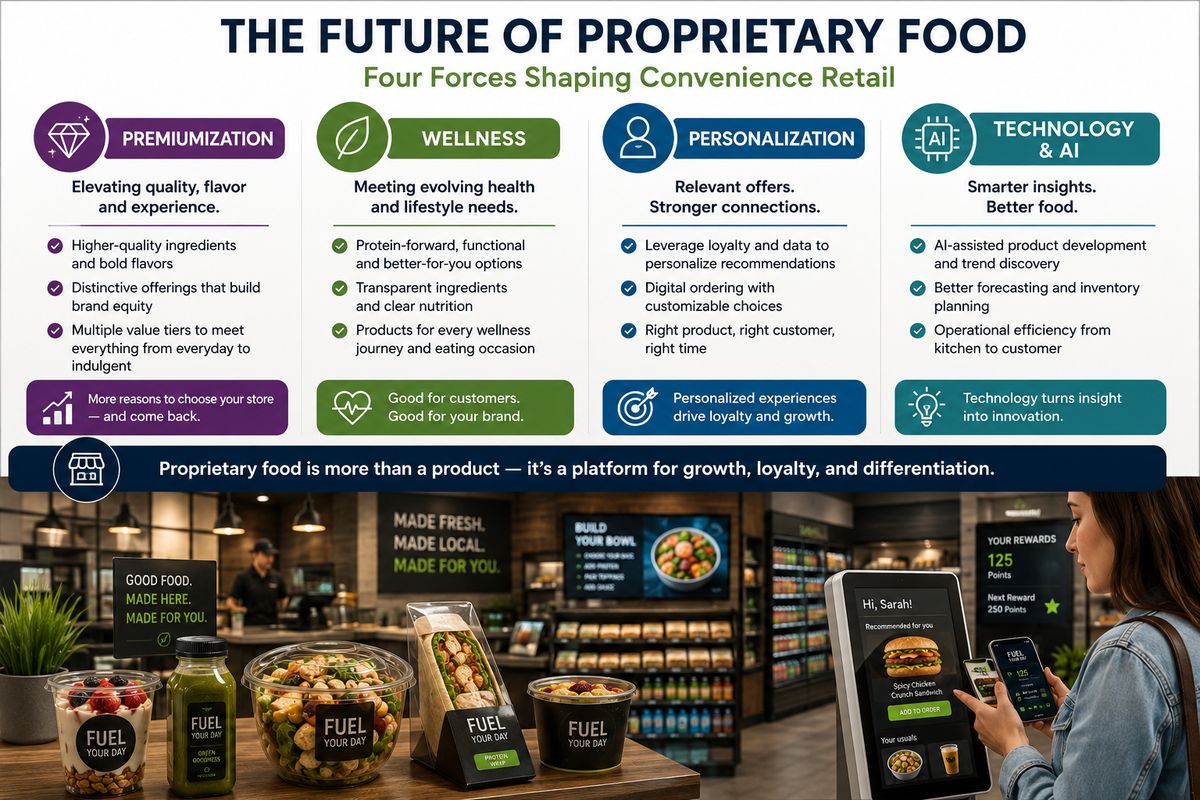
A premium breakfast sandwich, distinctive pizza, specialty beverage or higher-quality grab-and-go meal can communicate something about the retailer itself. When the product succeeds, some of the brand equity created by the food remains with the retailer rather than being transferred entirely to the manufacturer whose logo appears on the package.
Premiumization also allows convenience retailers to compete across more than one value tier. A proprietary portfolio can include opening-price-point products, dependable everyday offerings and premium items that justify higher prices because they provide a noticeably different experience.
The future of better-for-you convenience food is unlikely to consist of a single health category.
Consumer expectations are becoming more granular. One shopper may prioritize protein. Another may want fewer artificial ingredients. Others may look for portion control, plant-forward choices, lower sugar, functional beverages, recognizable ingredients or products that fit a particular eating pattern.
PLMA's outlook for store-brand food points toward protein-forward, minimally processed and nutrient-dense snacks as well as functional foods and beverages with targeted benefits.
For proprietary convenience products, this creates room for more carefully defined product families rather than a generic healthy-food section.
A retailer could develop a protein-focused grab-and-go group, a line of simpler-ingredient snacks or beverages positioned around specific functional benefits. The advantage of ownership is that these products can be coordinated with merchandising, digital communication and loyalty offers in ways that reinforce the retailer's broader food strategy.
Transparency will matter alongside wellness. Customers increasingly expect to understand what they are buying, which places greater importance on ingredient communication, allergen information, nutrition and packaging that makes product attributes easy to interpret.
Proprietary products become even more strategically valuable when retailers can connect them to what they know about individual customers.
Convenience retailers now operate sophisticated loyalty programs, apps, digital ordering platforms and customer-data systems. Those tools can increasingly influence which proprietary products customers discover and how retailers develop future offers.
Instead of promoting the same new product to everyone, a retailer might identify customers who regularly purchase breakfast, pizza, energy beverages or high-protein snacks and introduce relevant proprietary products directly to those audiences.
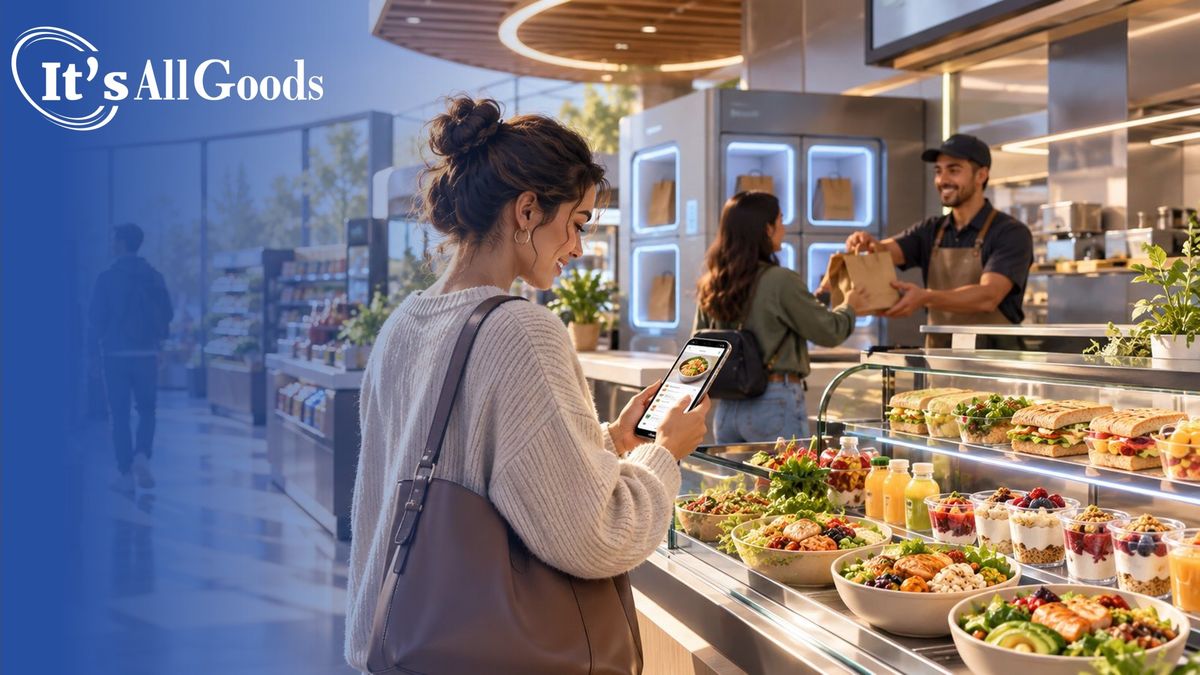
Digital ordering creates another level of personalization. Made-to-order food can provide customizable ingredients, sizes and combinations while still operating within a proprietary platform.
Technology can also help retailers understand which combinations customers actually prefer. Over time, transaction and loyalty data can help distinguish a novelty from a repeatable product opportunity.
The result is a feedback loop: proprietary products generate customer data, customer data improves product decisions, and better products strengthen the proprietary program.
Artificial intelligence and advanced analytics are beginning to affect food innovation before a product ever reaches the store.
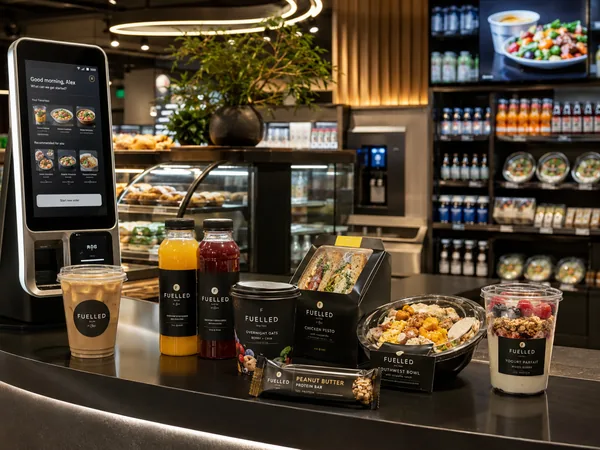
Foodservice professionals are experimenting with AI for recipe development, concept testing, menu ideation and cuisine research. NACS has reported on chefs using AI to pressure-test ideas and explore new menu possibilities while retaining human culinary judgment as an essential part of the process.
That capability could become particularly useful for multiunit convenience retailers.
A retailer evaluating hundreds or thousands of transactions across many locations may be able to identify combinations that would be difficult to recognize manually: flavor preferences by market, ingredients that perform differently by daypart, emerging combinations within loyalty behavior or products that generate repeat purchases rather than one-time trials.
Technology will not eliminate the need for culinary expertise, supplier knowledge or real-world testing. It can, however, give those teams more information with which to make decisions.
The strongest proprietary programs will likely combine data-driven insight with genuine product development rather than treating technology as a substitute for it.
Casey's provides a useful example of how proprietary food can evolve from a successful menu item into a broader strategic platform.
The retailer's 2026 three-year strategic plan places food and beverage growth among its central priorities. Casey's plans to continue expanding made-to-order offerings such as pizza and chicken wings while also growing its private-brand portfolio. At the same time, the company is investing in technology for forecasting, inventory planning, kitchen efficiency and its digital customer experience.
The combination is important.
Casey's is not treating food, private brands, technology, loyalty and store growth as unrelated programs. They reinforce one another. Its proprietary pizza business gives the retailer a distinctive food identity. Digital tools support ordering and loyalty. Operational improvements make the program easier to execute as the chain grows. Product innovation provides additional reasons for customers to return.
That is a useful model for the future of proprietary convenience food: the product itself remains important, but its value becomes greater when it is connected to the entire retail system.
For retailers with genuinely distinctive products, food itself can increasingly perform the work of advertising.
A customer may forget a promotion but remember a breakfast sandwich that is available only at one chain. A specialty beverage can become part of a routine. A pizza or snack can develop enough recognition that customers discuss it independently of the fuel or convenience transaction that originally brought them into the store.
That changes the economics of product innovation.
A proprietary product is not simply an item generating gross margin. It can create store visits, app engagement, social-media conversation, loyalty participation and brand recognition. Successful products may even help a convenience retailer enter new markets with something customers can immediately associate with the brand.
This is where proprietary food begins to resemble intellectual property.
The recipe, product name, packaging, customer experience and retailer association collectively create something competitors cannot reproduce simply by stocking the same national brand.
Greater opportunity also increases the consequences of poor execution.
As proprietary food becomes more visible and more closely connected to the retailer's identity, quality failures become brand failures. Inconsistent products, confusing packaging, weak supplier controls or poorly executed store procedures can undermine the very differentiation the program was designed to create.
That is why the future described here depends on the operational foundation discussed in Article 7B. Innovation can move faster, personalization can become more sophisticated and product portfolios can become more ambitious—but only when the retailer has reliable specifications, sourcing, food-safety controls, training and measurement behind them.
The exciting part of proprietary food is creativity.
The durable part is execution.
Convenience retailers are entering a period in which proprietary food can become much more than a collection of store-brand products. Premium positioning, wellness, global flavors, personalization, digital ordering, loyalty data and AI-assisted product development are expanding the possibilities.
The retailers that benefit most will not necessarily be those with the largest private-label assortment. They will be those that develop products with a clear purpose and connect those products to their broader brand, operations and customer experience.
When that happens, proprietary food stops being something a retailer merely sells.
It becomes one of the reasons customers choose the retailer in the first place.

Subscribe to receive latest news
12968 Vallejo Circle, Westminster CO. 80234
Phone: (303) 604-1064